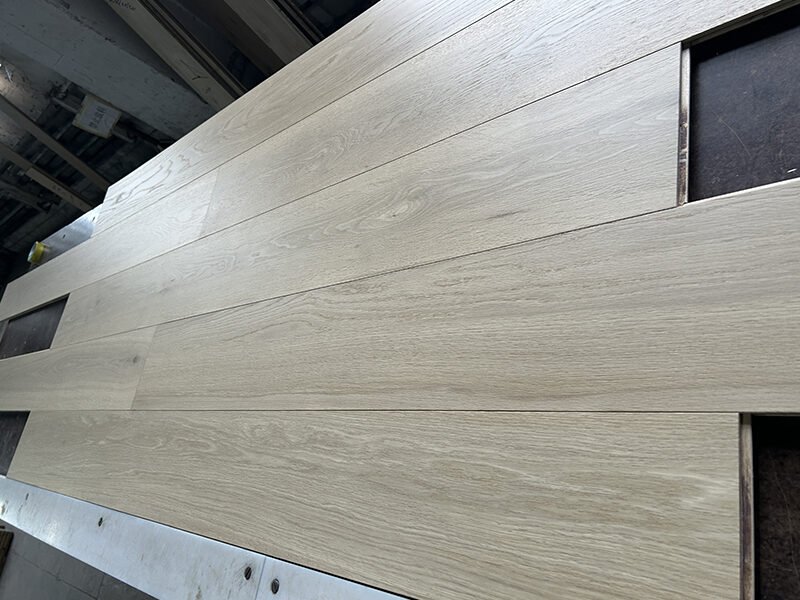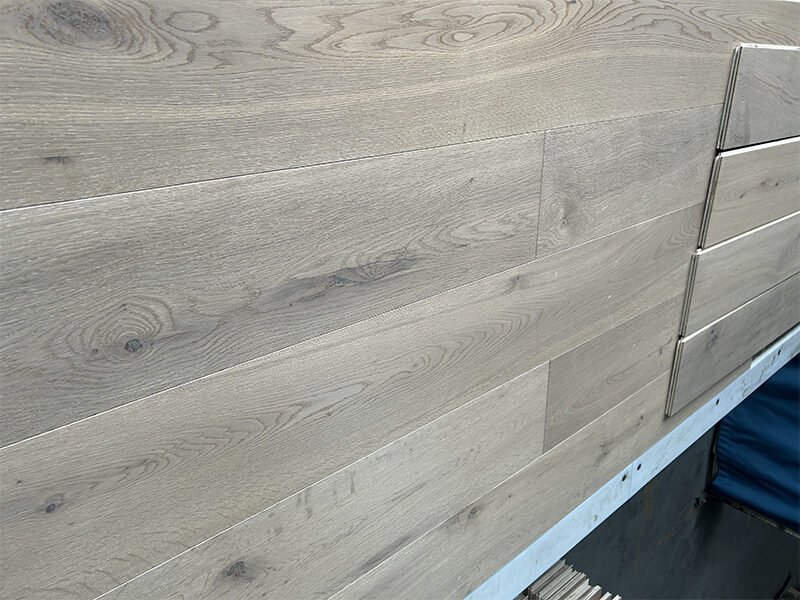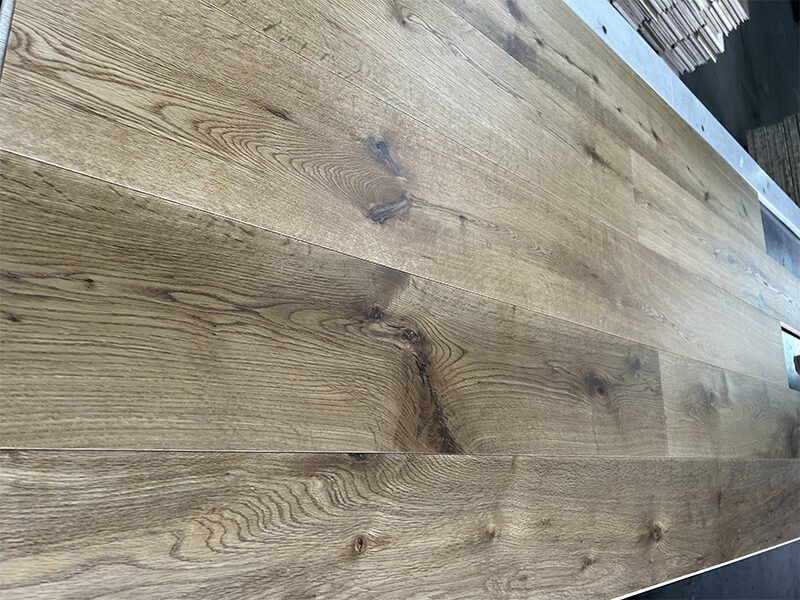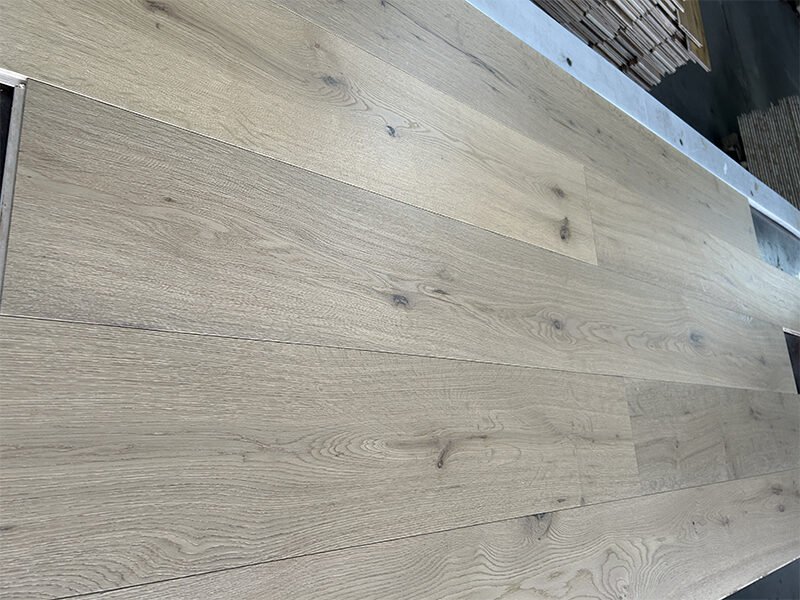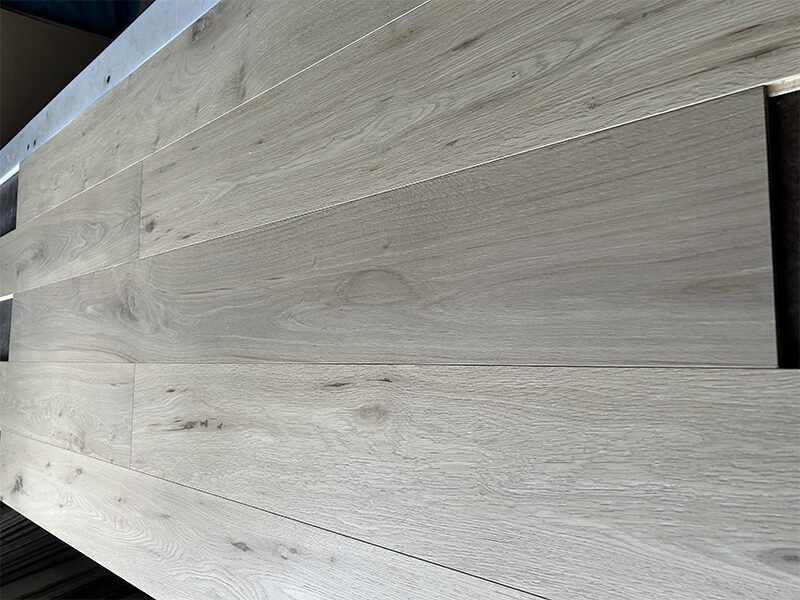
Engineered oak flooring should be selected against an approved finished sample, with color, sheen, grain, and acceptable variation recorded separately. For U.S. wholesalers, importers, distributors, and project buyers, a clear approval record helps connect the appearance shown to customers with the specification placed on the order.
For VIF’s RIVA OEM series, the documented finish options are UV Oiled and UV Lacquered. UV Lacquered is the main option identified for this series’ U.S. market offering. This guide focuses on selecting that finished configuration; it does not describe a market-wide preference or assume that every product has a matte appearance.
The aim is to move beyond a color name and create a usable reference for purchasing, inspection, and customer communication.
1. Begin Engineered Oak Flooring Selection with the Finished Configuration
Before comparing appearance, identify what each sample represents. Record the RIVA color name, ABC or CD grade, selected finish, and sample reference. Ask whether the sample corresponds to the configuration under discussion.
RIVA’s dimensional options are 1900 × 190 × 14/3mm or 1900 × 190 × 15/4mm. These mean 14mm total thickness with a 3mm oak face, or 15mm total thickness with a 4mm oak face. Construction and joint options require separate order confirmation.
Keep this information attached to the sample rather than relying on an unlabeled board. A color reference does not, by itself, confirm the finish, construction, or grade.
The supplied information describes the oak as White Oak, with raw material sourced from the Changbai Mountains in Northeast China. This does not establish the manufacturing origin of the complete flooring or indicate American White Oak.
2. Approve Color and Sheen as Separate Features
Start with the intended color direction, then review the actual finished surface. RIVA offers Pearl Beige, Warm Wheat, Linen Beige, Stone Greige, Mist Grey, and Natural Sand. These names identify color choices; they do not confirm a particular sheen or surface treatment.
For example, Pearl Beige provides a light beige direction with soft gray undertones, while Warm Wheat has a warmer wheat-brown appearance and more pronounced grain contrast. Those descriptions help build a shortlist, but approval should refer to physical samples.
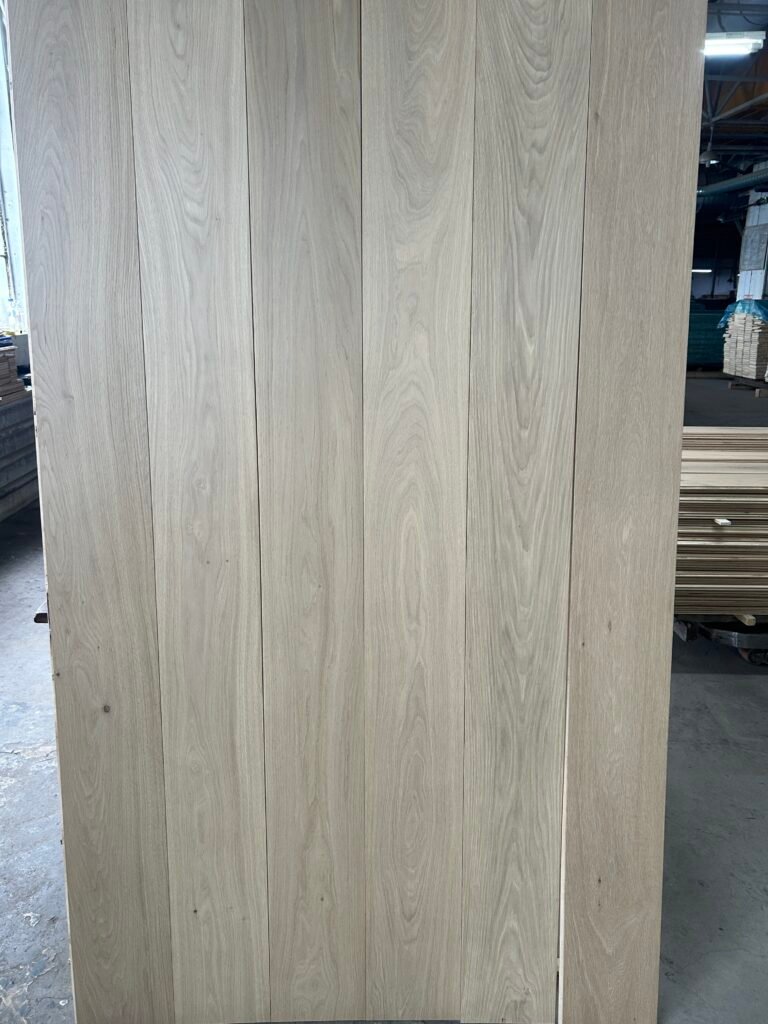
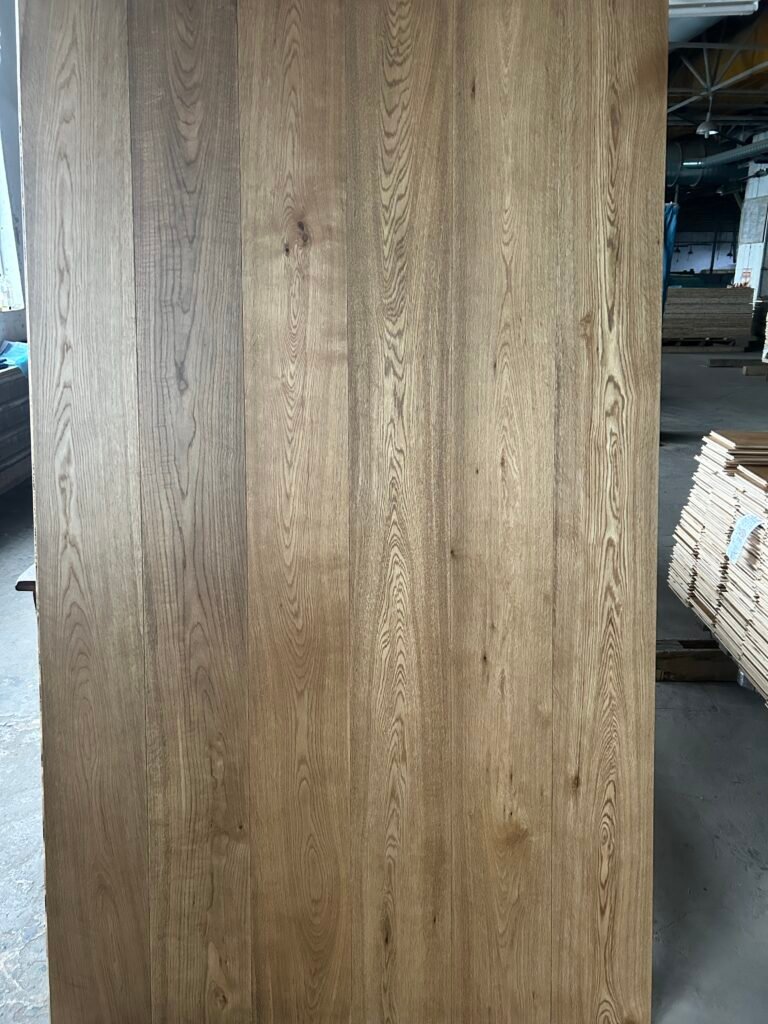
Review the same boards under the lighting relevant to the showroom or project. Record whether the visible sheen meets the design brief. If the requirement is matte, write that requirement into the approval discussion and confirm it against the actual sample.
Do not substitute “UV Lacquered” for a sheen description. Record both the selected finish and the accepted visual appearance. Where a numerical gloss requirement is needed, request the relevant specification and measurement method before placing it in the order.
3. Review Engineered Oak Flooring Grain and Grade across Several Boards
Ask whether several full-plank samples can be arranged. Review them together so the discussion covers the overall appearance as well as individual board details.
Observe grain direction, tonal contrast, visible knots, and any repairs present on the samples. Keep texture descriptions tied to what has been confirmed. A color name does not establish brushing, smoking, bleaching, or another treatment.
RIVA currently offers ABC and CD grades. Premium corresponds to ABC within this series. Character describes natural features and is not a universal synonym for CD; elsewhere, it can describe other letter grades without establishing that RIVA supplies them.
Use the written grading criteria and samples for the grade being ordered. Do not infer knot dimensions, repair limits, or a knot-free appearance from the name alone.
For customer-facing displays, retain the grade identification alongside the color. This helps staff explain why two products with the same color name may require different appearance references.
4. Define an Accepted Range for Orders and Repeat Purchases
A single preferred board is an incomplete reference for discussing variation. Ask the parties approving the order to identify the appearance range they accept across the reviewed sample group.
Record the agreed boundaries in words and photographs, supported by retained physical samples. If a feature needs clarification, resolve it before approving the reference rather than relying on a general instruction such as “keep it consistent.”
For repeat orders, identify which approved reference remains applicable and whether a new sample review is required. Do not promise that separate batches will be visually identical.
| Approval item | What to record | What still needs separate confirmation |
|---|---|---|
| Color | Named color and approved sample reference | Accepted variation across boards |
| Sheen | Appearance accepted under recorded lighting | Any numerical gloss requirement and method |
| Grain and grade | Correct-grade sample group and written criteria | Specific limits not already agreed |
| Finish | UV Lacquered configuration selected | Product-specific finish documentation |
| Batch reference | Retained samples, photographs, revision date | Procedure for later orders or changes |
| Care information | Applicable document and revision | Approved products, methods, and restrictions |
5. Complete the Approval with Care Documents and Order Records
Request care information applicable to the selected UV Lacquered product. Before preparing retailer handouts or project handover materials, confirm which cleaning products, methods, restrictions, and repair guidance are documented.
Avoid writing maintenance claims from appearance alone. A surface that looks matte does not, by that description, establish a cleaning routine, scratch resistance, or a wear rating.
Create one approval package containing the sample reference, color, grade, sheen description, finish, dimensions, selected construction, joint, and relevant documents. The available construction alternatives are three-layer poplar, multilayer poplar, multilayer eucalyptus, and multilayer all-birch; tongue-and-groove or locking joints are selected by order.
RIVA sample preparation is approximately two weeks, with specifications and fees to be confirmed. Production lead time starts from 45 days after receipt of the deposit, subject to order confirmation; this is not an arrival date.
VIF supports weekly order updates, inspection reports, and factory-audit arrangements through its cooperating supply chain. Agree on the inspection references and required documents before production arrangements are finalized.
Frequently Asked Questions
Is all UV lacquered engineered oak flooring matte?
A matte appearance must be confirmed against the actual product sample and agreed specification. The finish description “UV Lacquered” alone does not confirm sheen.
Can a color photograph replace a finished sample?
Use photographs for initial screening and documentation. For approval, discuss physical samples representing the intended color, grade, and finish, and retain the agreed reference.
Does ABC mean the boards will be completely free of knots?
Do not assume this. RIVA uses Premium for ABC, but acceptance should follow the written grading criteria and approved samples. No knot-free guarantee is established by the supplied information.
Can the same color use different configurations?
The series offers configuration alternatives. Confirm the chosen thickness, construction, joint, and finish for the particular order rather than treating all options as one finished product.
What care information should a distributor request?
Request the product-specific care document, including approved cleaning guidance, restrictions, and any documented repair instructions. Confirm its applicability before sharing it with customers.
Discuss Your Finished Sample Requirements
Choosing engineered oak flooring for your next order or project? Review the relevant RIVA color and grade products, then send VIF your company information, intended U.S. market or project, estimated quantity, and preferred specification. Include your sheen requirement and sample-review priorities so the finished appearance can be discussed alongside the order configuration.