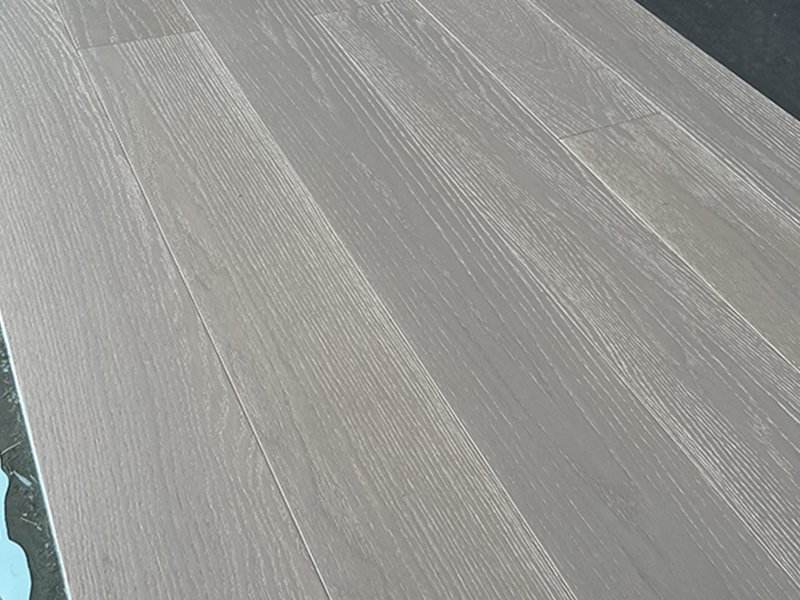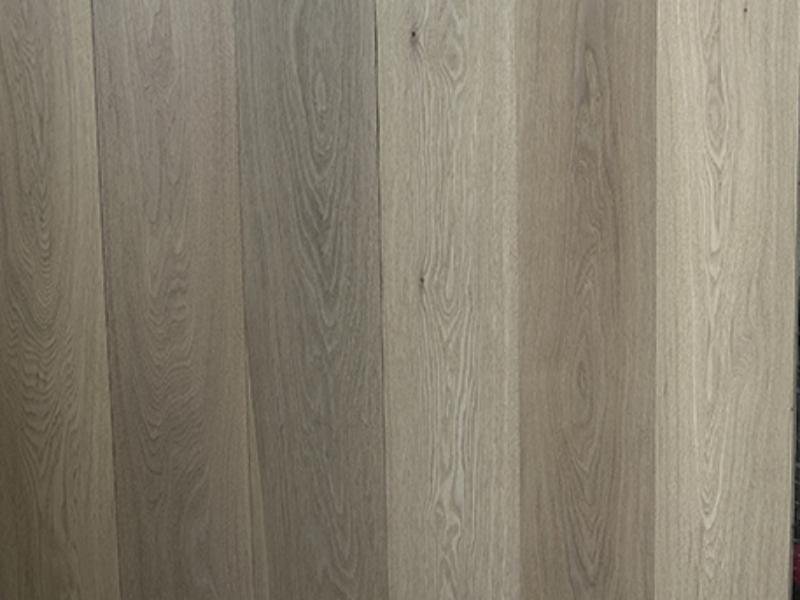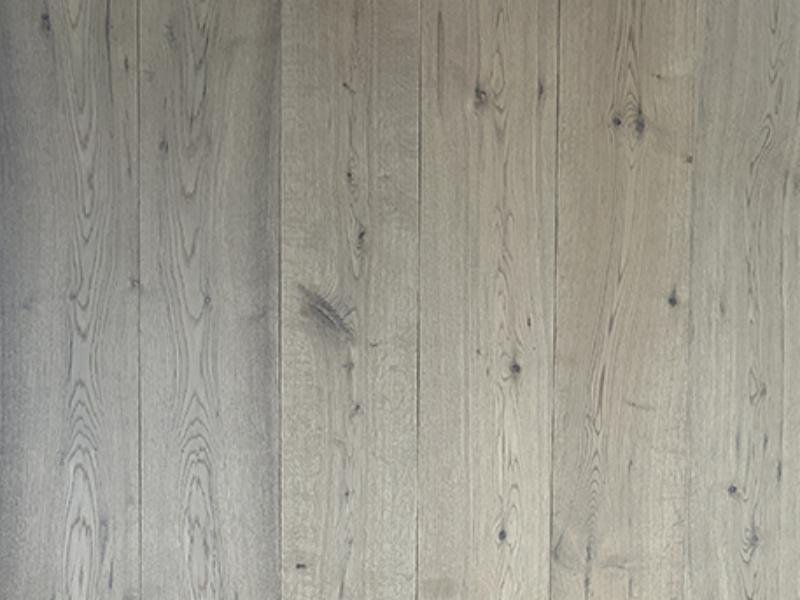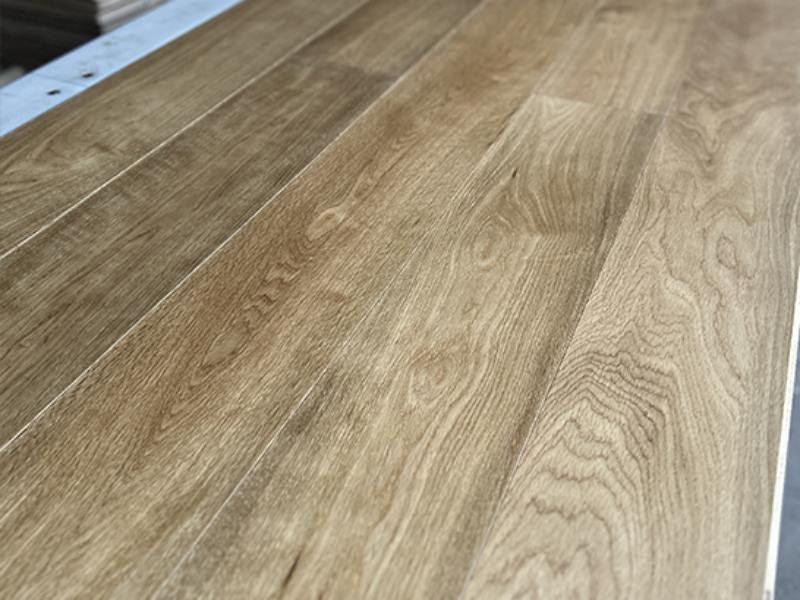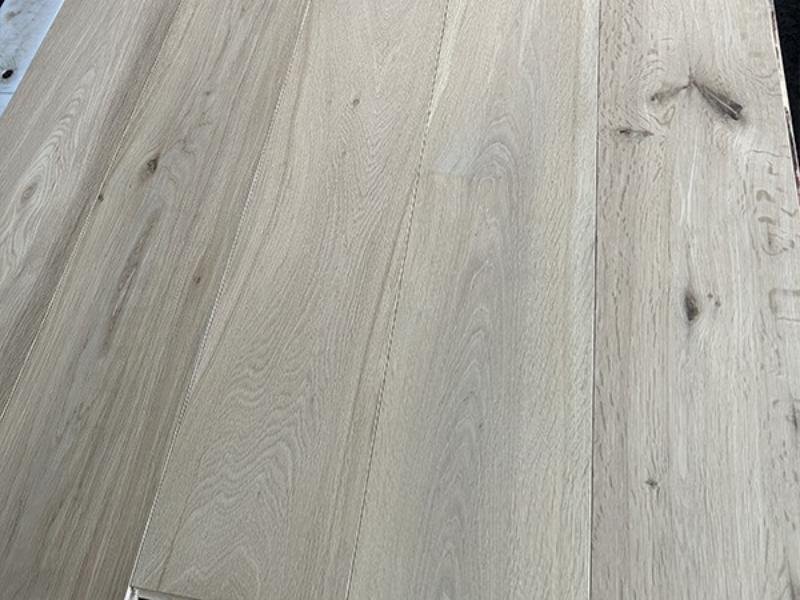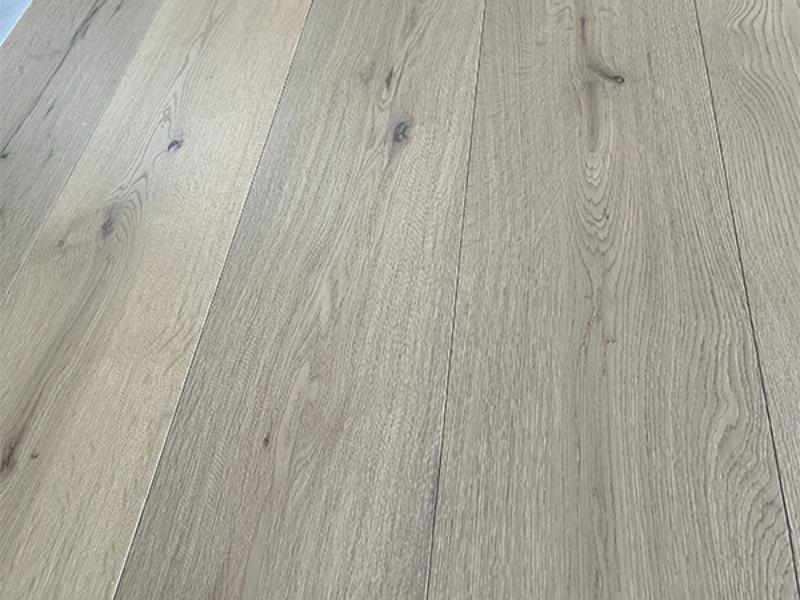
Oak wood flooring selection becomes clearer when buyers separate three decisions: construction, appearance grade, and finish. First establish whether the requirement is solid or engineered flooring. Then confirm the accepted wood character and finished appearance through written criteria and physical samples. Finally, record the complete configuration for the order. VIF’s OEM series is engineered oak flooring, with alternative thicknesses, constructions, joints, and finishes. These options require selection; they are not all combined in one board.
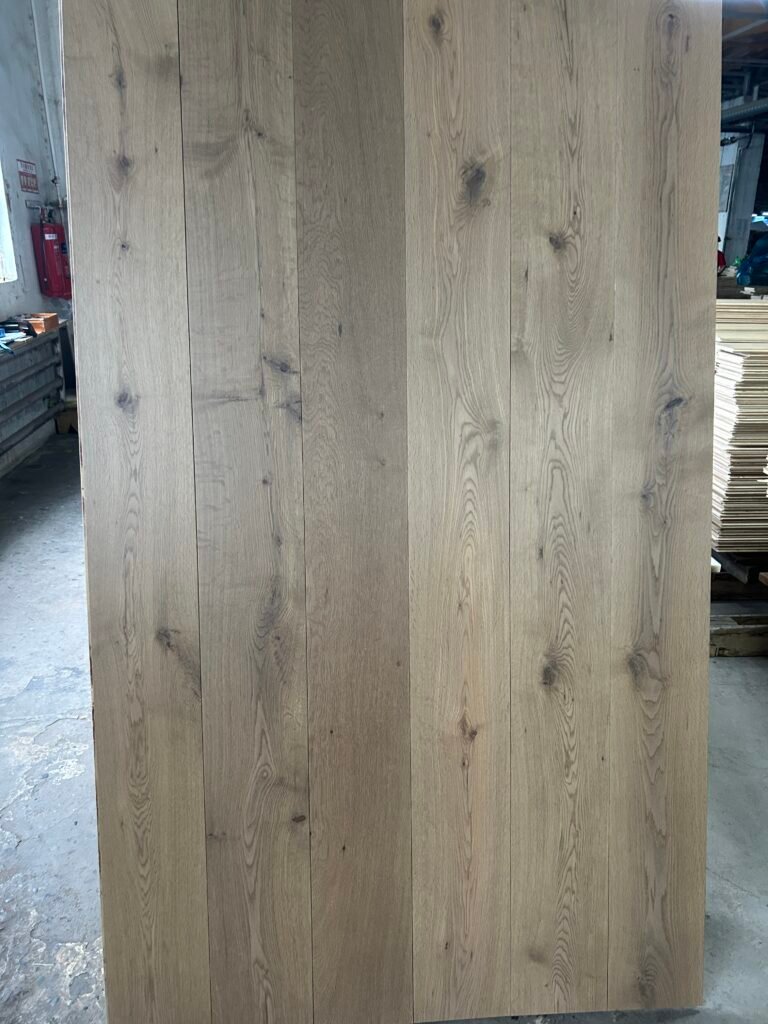
Start with Construction: Solid or Engineered Oak Wood Flooring?
Solid wood flooring consists of a single piece of wood through its thickness. Engineered wood flooring uses a wood surface over a layered construction. Both can provide a real wood surface, but they should be identified accurately in specifications. For an overview of solid and engineered construction, see the NWFA guide to wood flooring types.
The flooring discussed here has an engineered construction with an oak face. Supporting construction options include three-layer poplar, multilayer poplar, multilayer eucalyptus, or multilayer all-birch, with the final configuration confirmed by order.
For a wholesale assortment or project submission, request the selected construction in writing. Do not use “engineered” as a complete specification or assume that all products sharing an oak appearance have the same internal structure.
| Selection Point | Solid Oak Flooring | Engineered Oak Flooring |
|---|---|---|
| Basic construction | A single piece of wood through its thickness | Oak face over the selected supporting construction |
| Thickness information | Confirm the specific product | 14 mm total / 3 mm oak face, or 15 mm total / 4 mm oak face |
| Supporting construction | Not a separate plywood or layered core | Three-layer poplar or one of the listed multilayer options |
| Appearance approval | Review the specific grade and sample | Review ABC or CD criteria and the corresponding sample |
| Installation suitability | Requires product-specific confirmation | Requires separate confirmation for the selected configuration |
This comparison identifies construction differences. It does not establish that one type is always better or confirm installation suitability.
Read Dimensions and Configuration as a Complete Specification
The boards measure 1900 × 190 mm. Thickness options are 14/3 mm or 15/4 mm, indicating total thickness/oak face thickness. The oak face is included in the total thickness; the two figures are not added together.
Choose the thickness and supporting construction together. Tongue-and-groove or locking joints are selected for the order, but the joint name alone does not confirm an installation method.
The moisture content control target is 7–9%. Record it as a product control target, rather than converting it into an unprovided site requirement.
The oak raw material comes from the Changbai Mountains in Northeast China. That sourcing information does not establish where the complete board is manufactured. The supplied series information describes the Chinese oak as White Oak; it should not be relabeled American White Oak or presented as U.S.-made.
Confirm Oak Flooring Grades with Written Criteria
The current grade selections are ABC and CD. Premium describes the ABC selection and should not automatically be treated as equivalent to another supplier’s Select grade.
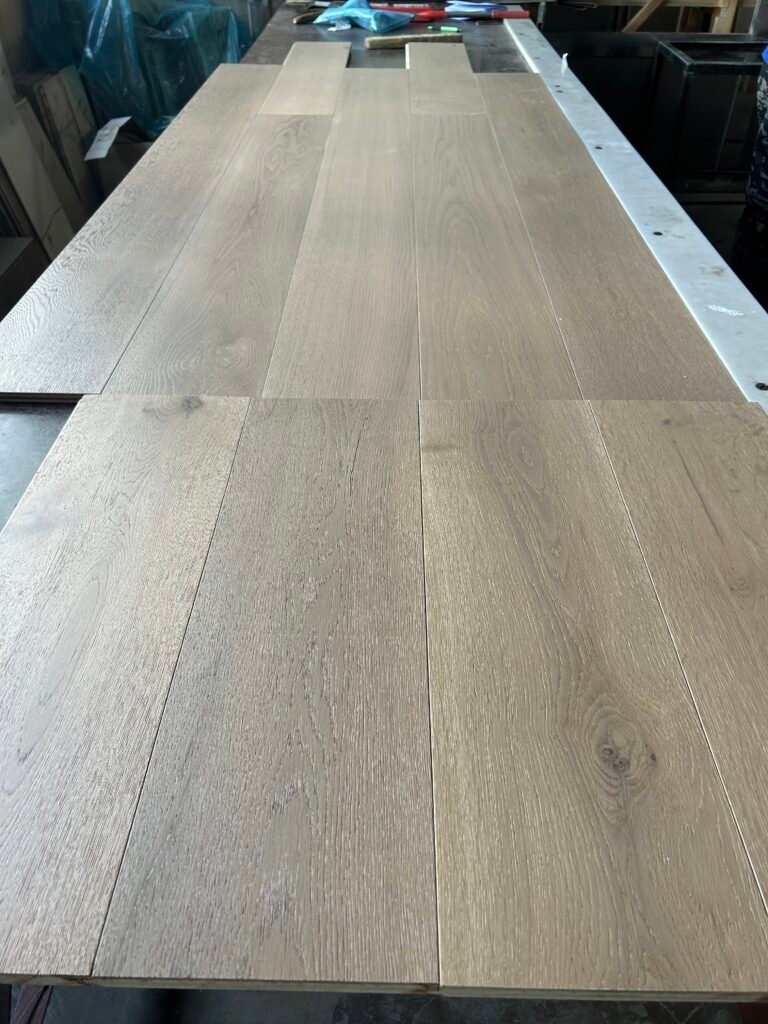
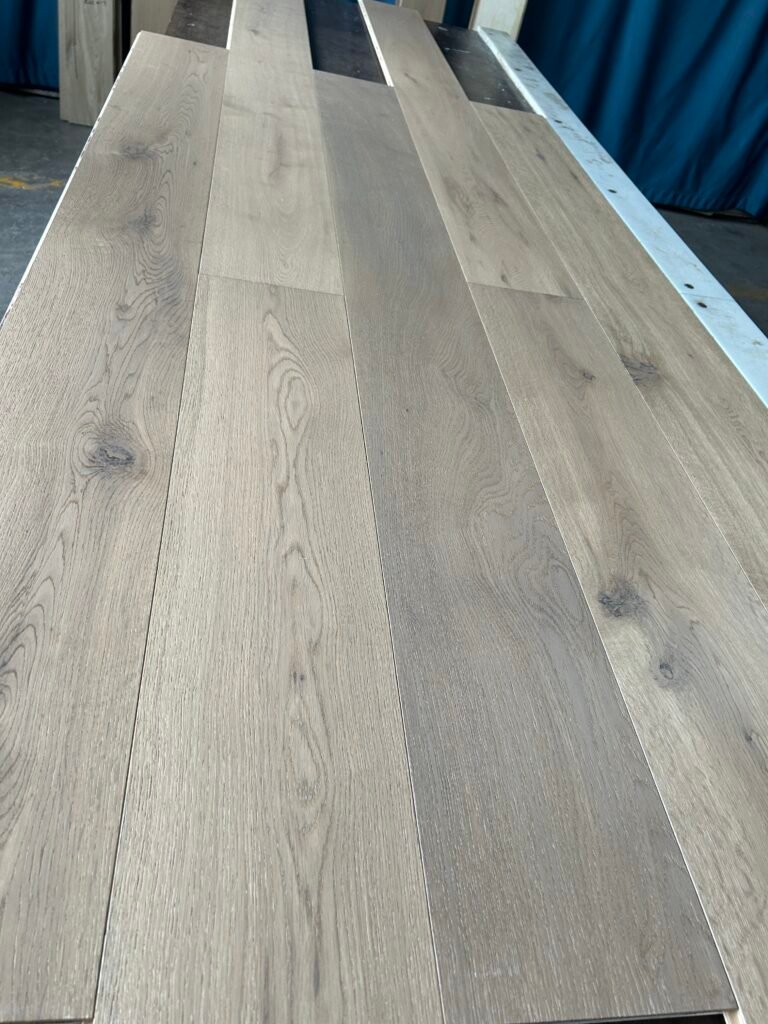
Character describes natural wood features. It is not a universal synonym for CD and may cover CC, CD, DD, or other grades in different grading systems. This does not mean all those grades are currently available.
Ask what the grade designation means for the actual order. Agree on written appearance requirements and corresponding samples rather than importing another supplier’s knot, crack, or filler limits. No such numerical limits have been established here.
For distributors, maintain separate photographs and sample references for each color-and-grade combination. For project teams, record who approves the grade and whether any appearance questions remain open. ABC and CD should be presented as different appearance selections, without labeling CD as defective or inferior.
Choose the Finish Through the Finished Sample
Finish options are UV Oiled or UV Lacquered. These are alternatives. Confirm which finish applies to the sample and order.
For this series in the U.S. market, UV lacquer is the main finish direction. This describes the series’ market focus, not an industry-wide statistic.
Do not assume that every finish is matte. Review the actual sheen, color, and tactile appearance on the proposed finished sample. A color reference does not establish brushing, smoking, bleaching, or another treatment.
When comparing prefinished oak flooring, identify any differences between samples before approving them. A color accepted on one coating should not silently become approval of another. Request the maintenance information applicable to the selected finish; do not infer cleaning or performance claims from the finish name. Unfinished supply has not been confirmed.
Use Color and Grade Together When Building a Selection
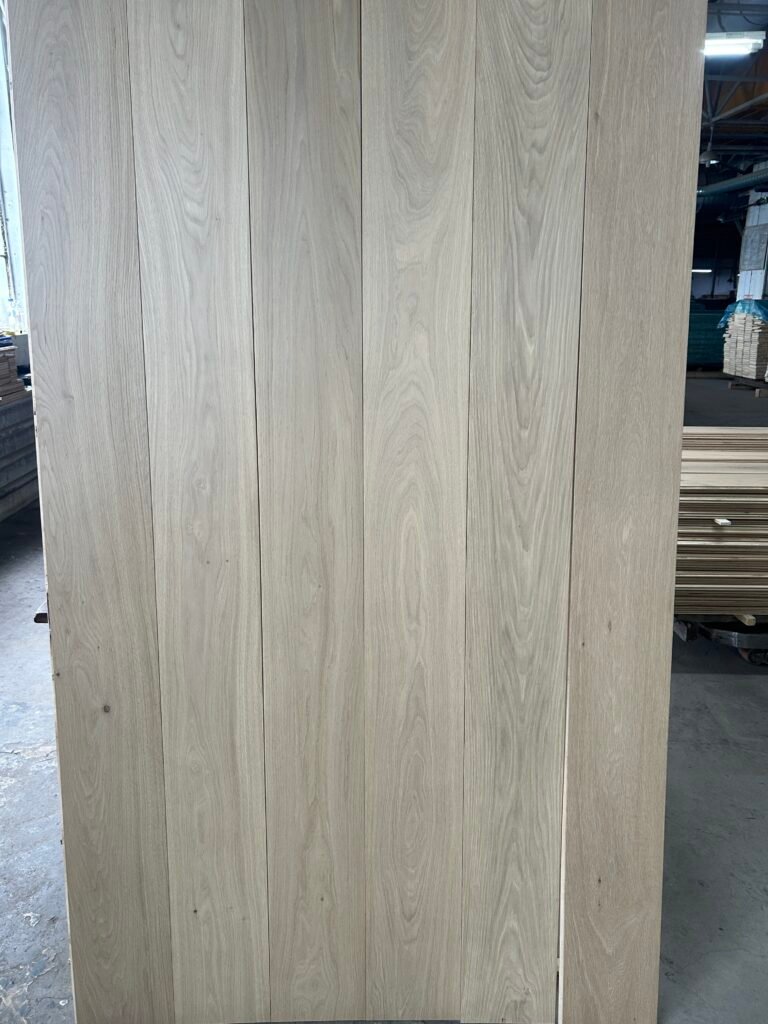
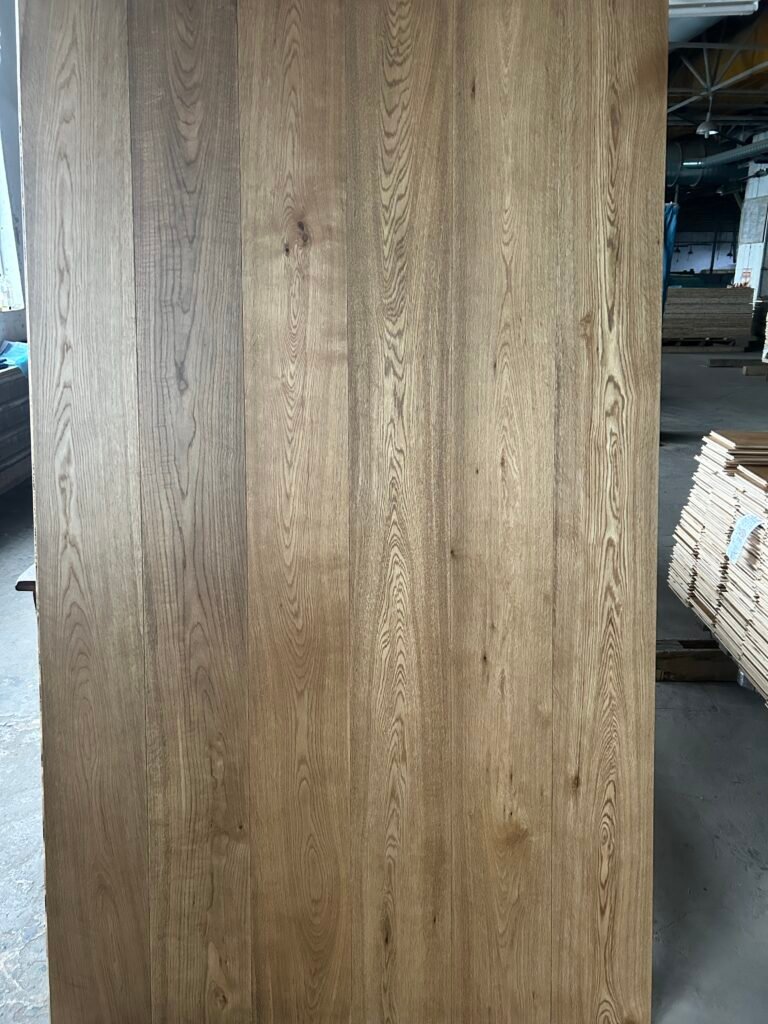
The six colors provide distinct references for assortment planning and project material review:
- Pearl Beige: Light beige with soft gray undertones.
- Warm Wheat: Warm wheat-brown with more pronounced light-and-dark grain contrast.
- Linen Beige: Light linen color with slightly warm greige undertones.
- Stone Greige: Stone-gray and beige-brown tones with a neutral, composed appearance.
- Mist Grey: Soft mist-gray with neutral-to-cool undertones.
- Natural Sand: Sandy beige with a slightly warm wood tone.
These names describe color directions, not manufacturing processes. Compare physical samples beside the intended cabinetry, wall finishes, stone, and fabrics. Discuss natural variation rather than expecting every board to reproduce a photograph exactly.
For an initial review, compare Pearl Beige and Warm Wheat to assess different color directions, then review the required grade. Keep a record of the color, grade, construction, thickness, joint, and finish associated with each approved sample.
Prepare a Clear Sampling and Purchasing Brief
Send the company name, target market or project location, estimated quantity, preferred colors, grade requirements, and proposed configuration. Mark unresolved items clearly.
OEM color customization is supported. Sample preparation takes approximately two weeks, with sample specifications and charges confirmed separately. Production lead time starts from 45 days after receipt of deposit, subject to mutual order confirmation; it is not arrival time.
VIF supports weekly order updates, inspection reports, and factory audit arrangements through its supply coordination. Raw materials are legally sourced and traceable, with specific supporting documents confirmed separately.
Before ordering, align the approved sample with the written specification. Do not carry assumptions about installation, underfloor heating, certification, warranty, or packaging into the order.
Frequently Asked Questions
Is this solid or engineered oak flooring?
It is engineered oak flooring. Record the oak face and supporting construction together, using the selected 14/3 mm or 15/4 mm configuration.
Does Premium mean the same as Select?
Not automatically. Premium describes the ABC grade selection. Other suppliers may use different terminology. Confirm the agreed written grading criteria and approved samples.
Is Character always CD Grade?
No. Character describes natural wood features and can cover different letter grades. The current grade selections are ABC and CD; appearance acceptance depends on agreed written criteria and approved samples.
Are all products UV lacquered and matte?
No. UV Oiled and UV Lacquered are alternative finishes. UV lacquer is the main direction for the U.S. market, while sheen must be confirmed against the actual sample.
Can the color name confirm the surface treatment?
No. Color names describe appearance. They do not establish smoking, brushing, bleaching, an unfinished surface, or another process.
Review Products and Discuss Samples with VIF
Review the relevant color-and-grade product pages, then send VIF your preferred selection and configuration. Include your company name, market or project location, quantity, purchasing schedule, and sample requirements to provide a clear purchasing brief.