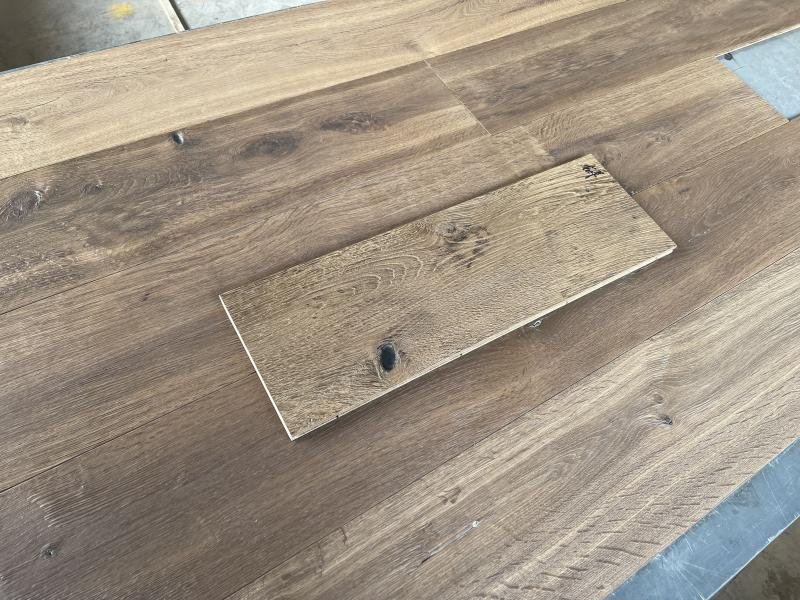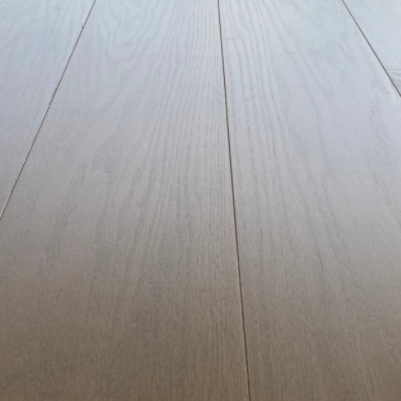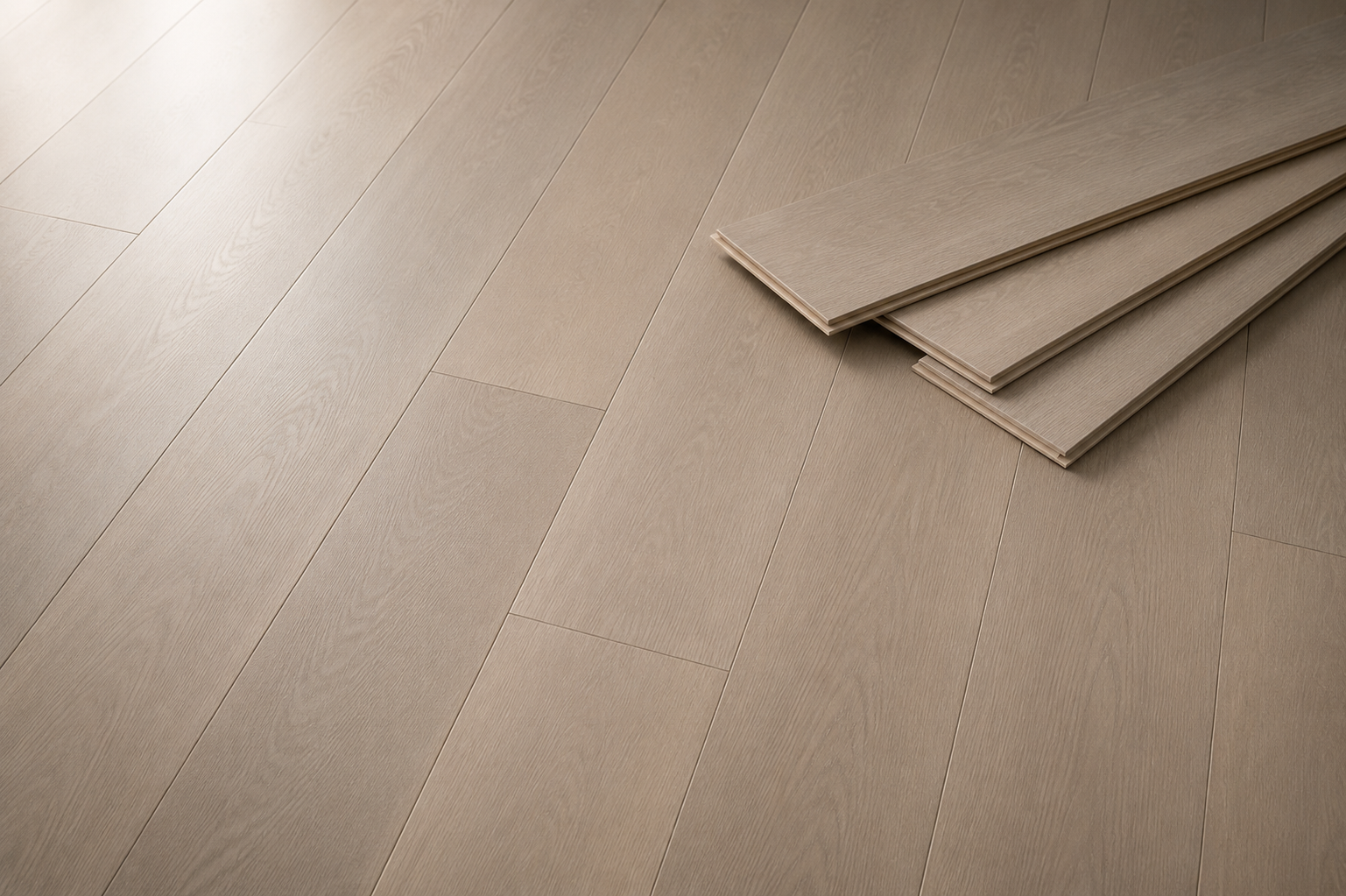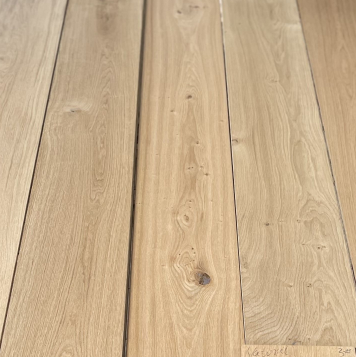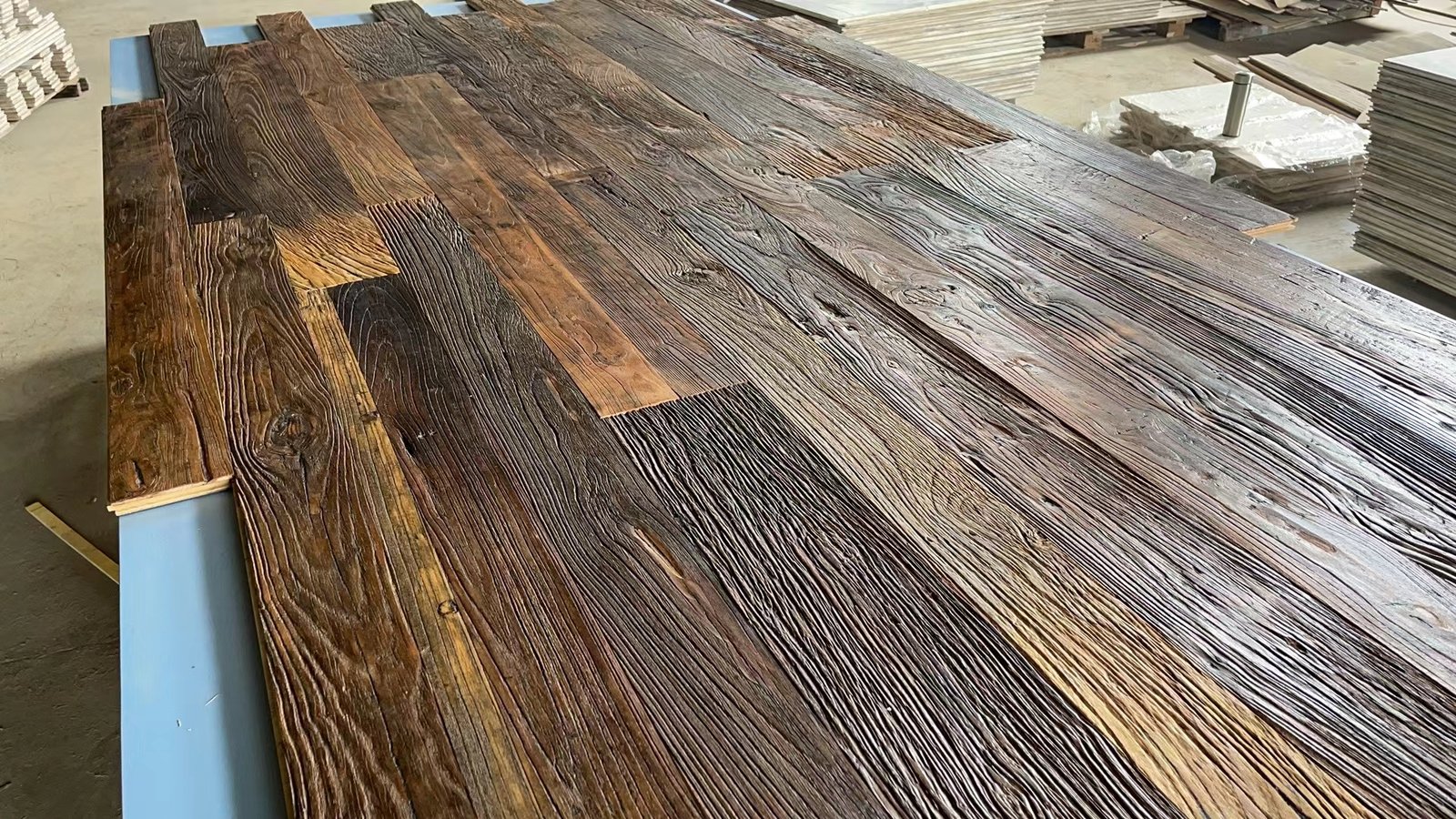
White oak wood flooring colors are easier to compare when you separate undertone, grain contrast, and overall appearance. Start with the material palette: beige directions can introduce gentle warmth, wheat-brown offers a warmer wood color, and gray or greige provides a more neutral-to-cool reference. Then compare the selected color in the required grade and finished configuration. Photographs help build a shortlist, while physical samples provide the reference for final approval.
VIF’s RIVA OEM series is engineered oak flooring. Its supplied material description identifies the Chinese oak as White Oak. The raw material comes from the Changbai Mountains in Northeast China; this does not identify the manufacturing origin of the finished board or imply American White Oak.
Compare White Oak Wood Flooring Colors by Undertone
“Light,” “natural,” and “gray” are useful starting descriptions, but they do not tell the whole story. Two pale colors can differ in warmth, and a gray-beige color can relate differently to cabinetry than a cooler gray.
For wholesale assortments, give each color a clear visual role instead of presenting several samples with nearly identical descriptions. For project selection, compare the floor beside the actual wall, cabinet, stone, and textile references.
The six RIVA colors provide these selection directions:
| Color | Confirmed Color Direction | Useful Comparison Question | Suggested Material Pairing to Review |
|---|---|---|---|
| Pearl Beige | Light beige with soft gray undertones | Does the palette need pale beige with a gray influence? | Off-white walls, pale stone, neutral fabrics |
| Warm Wheat | Warm wheat-brown with pronounced light-and-dark grain contrast | Is a warmer wood color and clearer grain contrast desired? | Cream textiles, warm neutrals, wood cabinetry |
| Linen Beige | Light linen with slightly warm greige undertones | Would a gently warm gray-beige connect the surrounding materials? | Linen fabrics, warm whites, taupe finishes |
| Stone Greige | Stone-gray and beige-brown, neutral and composed | Does the design combine both gray and brown references? | Stone samples, beige upholstery, restrained metal accents |
| Mist Grey | Soft mist-gray with neutral-to-cool undertones | Is the intended palette cooler than the beige selections? | Gray stone, off-white paint, metal finishes |
| Natural Sand | Sandy beige with a slightly warm wood tone | Is a sandy neutral with subtle wood warmth preferred? | Beige fabrics, pale stone, warm white finishes |
These are visual pairing suggestions, not claims that a color is suitable for every room or project.
Beige, Wheat, or Gray: Build a Useful Shortlist
Beige: Compare the Kind of Warmth
Pearl Beige, Linen Beige, and Natural Sand should not be treated as interchangeable pale colors. Pearl Beige introduces soft gray undertones; Linen Beige has a slightly warm greige direction; Natural Sand brings sandy beige with a touch of warm wood color.
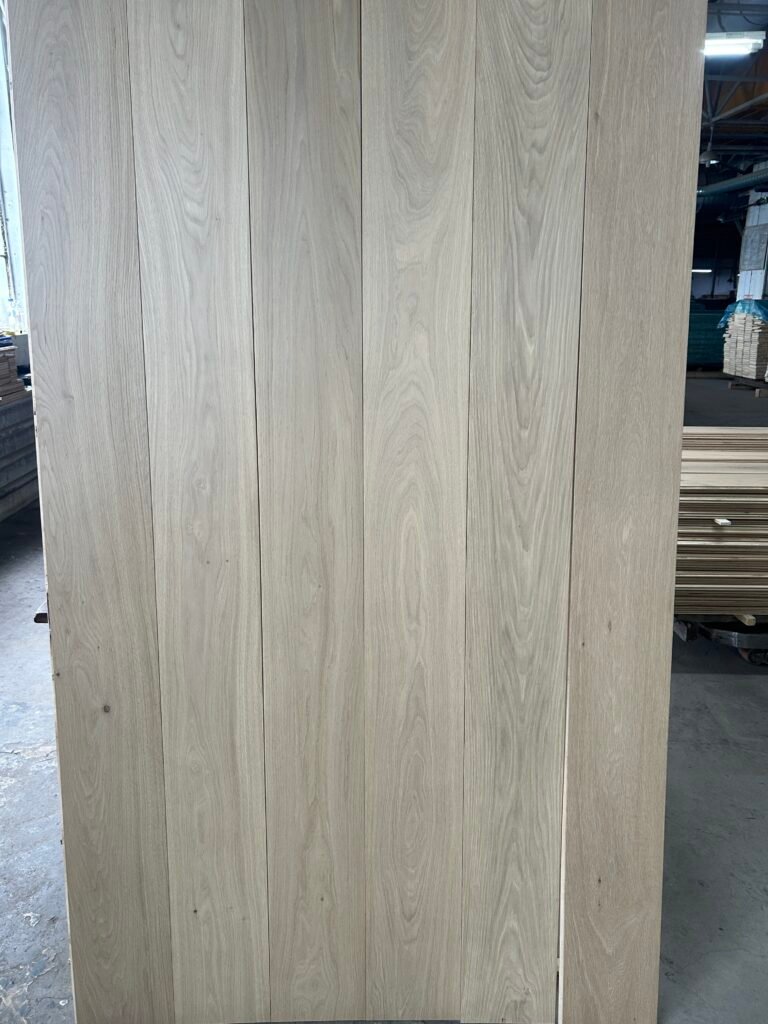
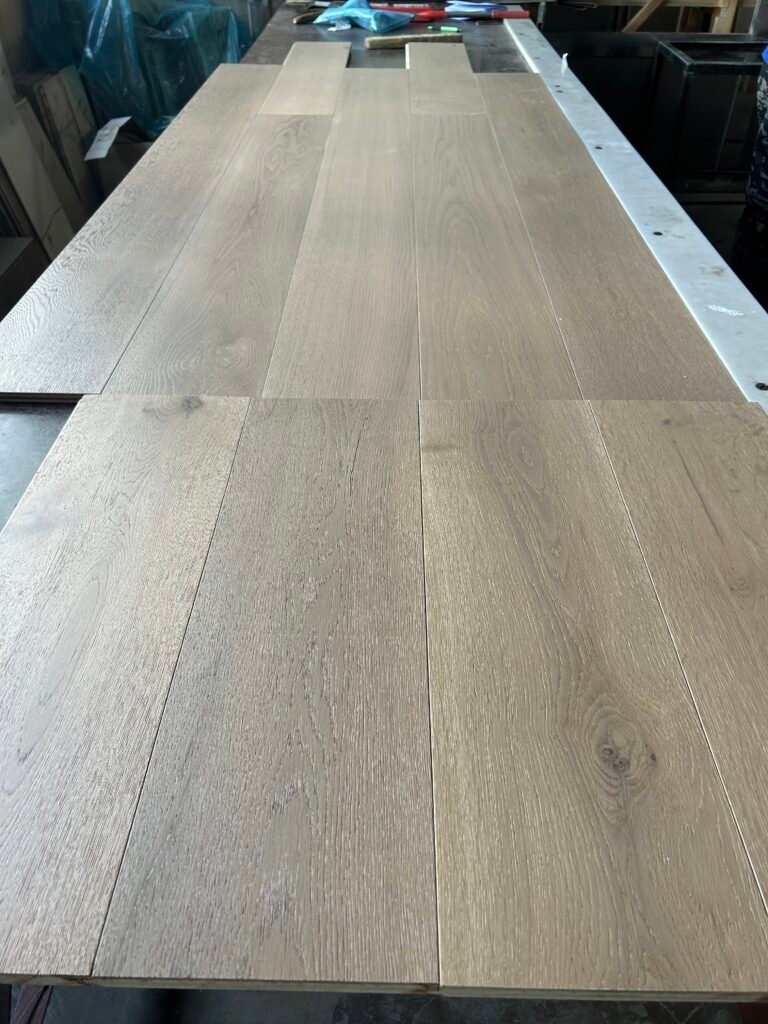
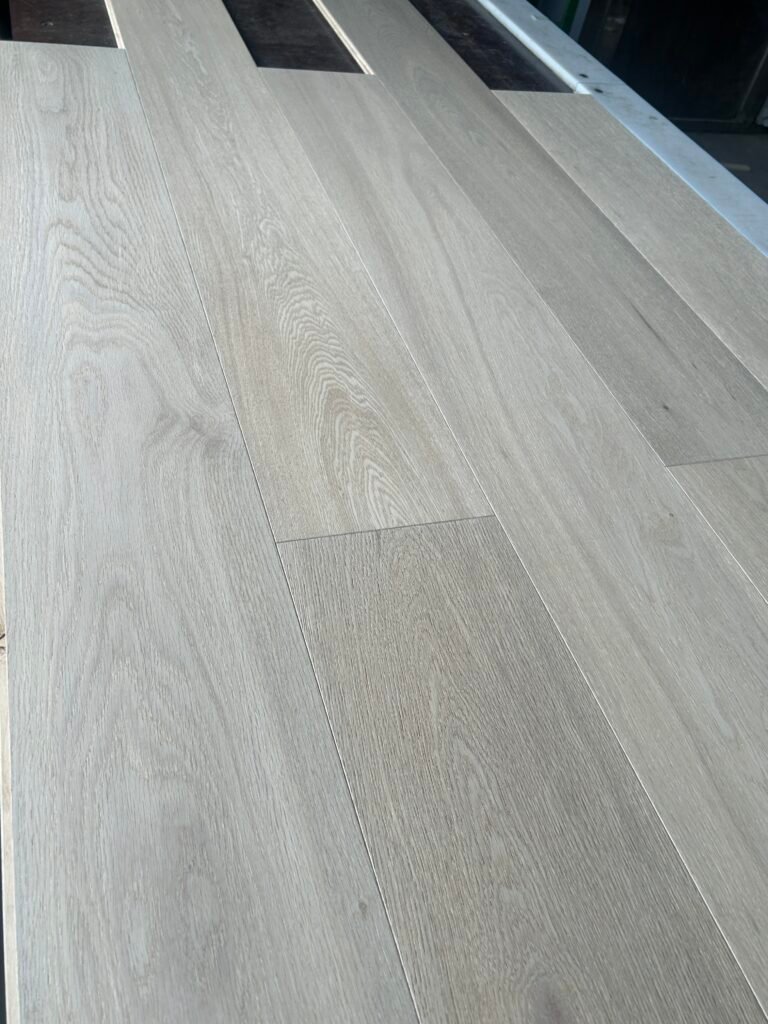
Place those samples beside the same materials. Record whether the preferred result is lighter beige, warmer greige, or a sand-colored wood reference. This gives buyers a more useful description than “the light one.”
Wheat: Review Color and Grain Contrast Together
Warm Wheat combines a warm wheat-brown color with more pronounced light-and-dark grain contrast. Assess both features. A buyer may like the color but want to review how the grain variation reads across a larger sample display.
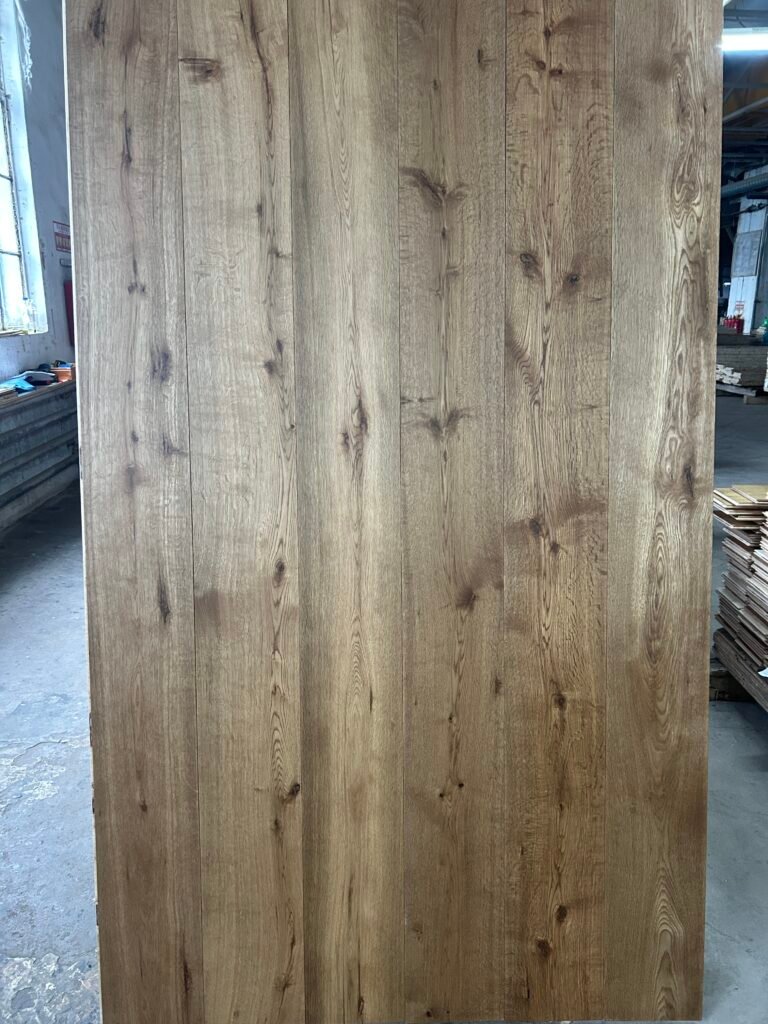
For distributors, show the overall board arrangement as well as a close-up. For designers, compare the sample with cabinetry and furniture finishes so the intended wood-color contrast is clear.
Gray and Greige: Keep the Distinction Visible
Mist Grey is neutral-to-cool, while Stone Greige combines stone-gray and beige-brown. Compare them side by side when the design includes both cool stone and warm fabrics.
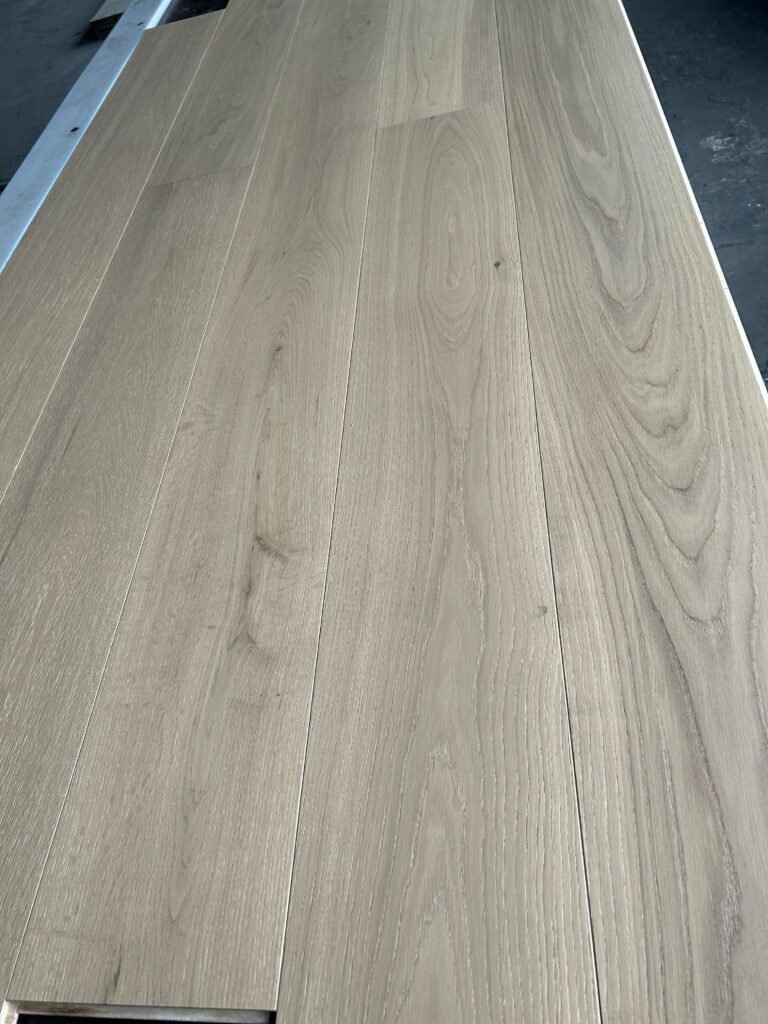
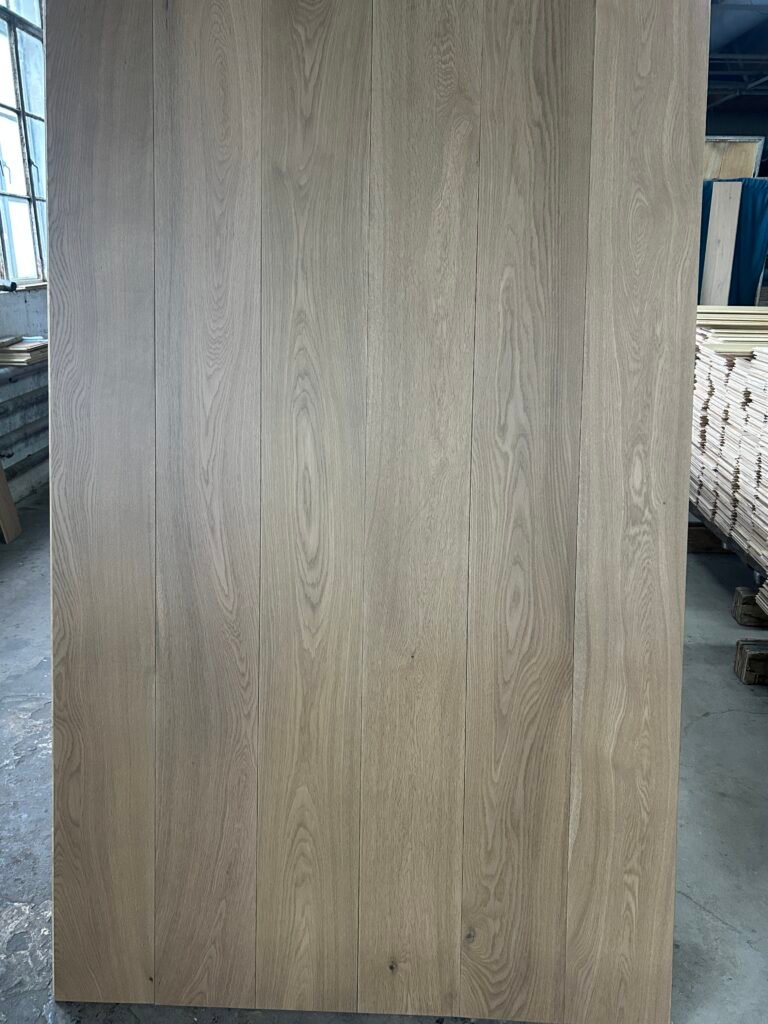
Avoid choosing a gray solely because its name matches another material. Review the complete combination, including the oak grain and the selected finish.
Keep Grade Separate from Color
RIVA’s current grade selections are ABC and CD. Within this series, ABC uses the Premium designation. That name should not be assumed equivalent to another supplier’s Select grade.
Character describes natural wood features rather than one fixed letter grade. It can cover different grades under different systems; it does not universally mean CD or establish that RIVA supplies CC or DD.
When comparing oak flooring samples, keep the color and grade visible on each label. Otherwise, a difference in natural wood character may be mistaken for a color difference. Do not use an ABC photograph to represent CD.
Agree on written grade criteria and approved samples. Do not infer knot, crack, or filler limits from a color photograph, and do not translate ABC into a knot-free promise.
Use Photographs to Shortlist, Samples to Approve
A photograph records the flooring under a particular set of viewing conditions. For a useful comparison, request images with consistent lighting, orientation, and framing wherever possible. Screen images should support the selection discussion rather than serve as the sole color standard.
Review an overall board display and a closer grain image. The wider view helps communicate variation across boards; the close-up helps explain the photographed surface. Neither image establishes an unlisted treatment or finish.
During physical sample review, place the shortlisted colors together beside the project materials. Record the approved sample reference and discuss acceptable natural variation. A single sample is not a promise that every board will look identical.
Keep the approved physical reference linked to the written order specification.
Confirm the Finished Configuration Before Ordering
RIVA boards measure 1900 × 190 mm. Thickness options are 14 mm total with a 3 mm oak face, or 15 mm total with a 4 mm oak face.
Construction options are three-layer poplar, multilayer poplar, multilayer eucalyptus, or multilayer all-birch. Tongue-and-groove or locking joints are selected for the order. These are alternative configurations.
Finishes are UV Oiled or UV Lacquered. For this series in the U.S. market, UV lacquer is the main direction. Confirm the actual finish and sheen; do not assume every sample is matte. Color names do not establish smoking, brushing, bleaching, or unfinished supply.
For the procurement brief, include:
- Selected color and grade.
- Thickness, construction, joint, and finish.
- Approved sample reference and written appearance criteria.
- Quantity, target market or project location, and purchasing schedule.
The moisture content control target is 7–9%. OEM color customization is supported. Sample preparation is approximately two weeks, with specifications and charges confirmed separately. Production starts from 45 days after receipt of deposit, subject to order confirmation; this is not arrival time. VIF supports weekly order updates, inspection reports, and factory audit arrangements.
Frequently Asked Questions
Does White Oak mean this flooring is American?
No. The supplied information describes the Chinese oak as White Oak. Raw material sourcing is the Changbai Mountains in Northeast China, which does not establish the finished board’s manufacturing origin.
Which RIVA color has the warmest stated direction?
Warm Wheat is described as warm wheat-brown. Natural Sand and Linen Beige also have warm elements, but they are different color directions. Compare physical samples before selecting.
Are Stone Greige and Mist Grey the same type of gray?
No. Stone Greige combines stone-gray and beige-brown. Mist Grey is a softer mist-gray with neutral-to-cool undertones.
Does the same color look identical in ABC and CD?
Do not assume it does. Review grade-specific samples and images, with written criteria for the accepted appearance and natural variation.
Does Natural Sand mean unfinished oak?
No. It is a color name. Available finish options are UV Oiled or UV Lacquered; unfinished supply has not been confirmed.
Review Colors and Discuss Physical Samples
Review the corresponding RIVA color-and-grade product pages, then send VIF your shortlist. Include your company, target market or project location, required quantity, preferred configuration, and purchasing schedule.
Discuss physical sample specifications and arrangements before final color approval.