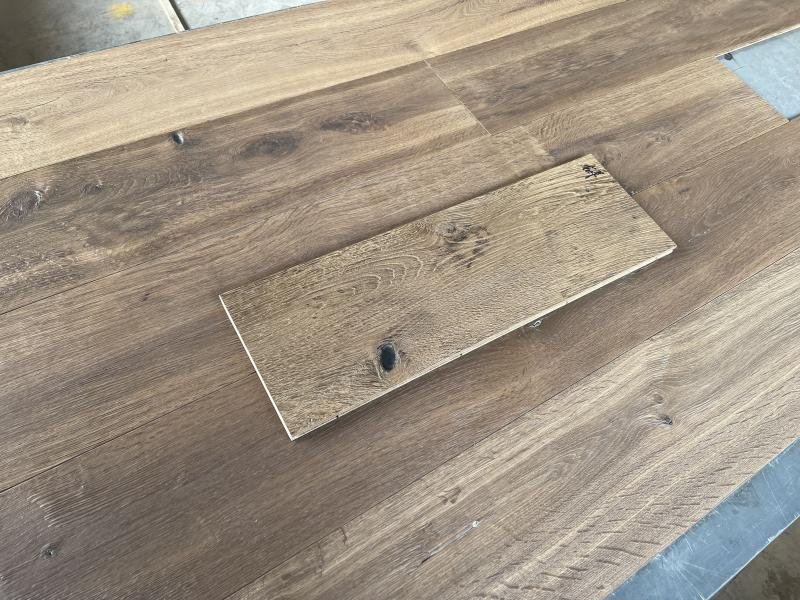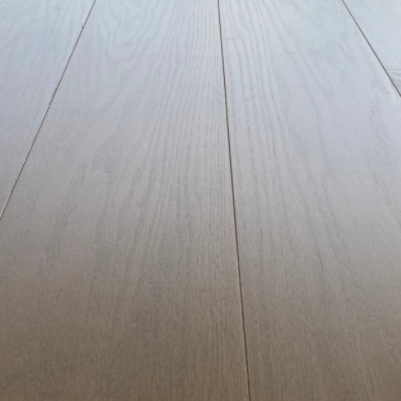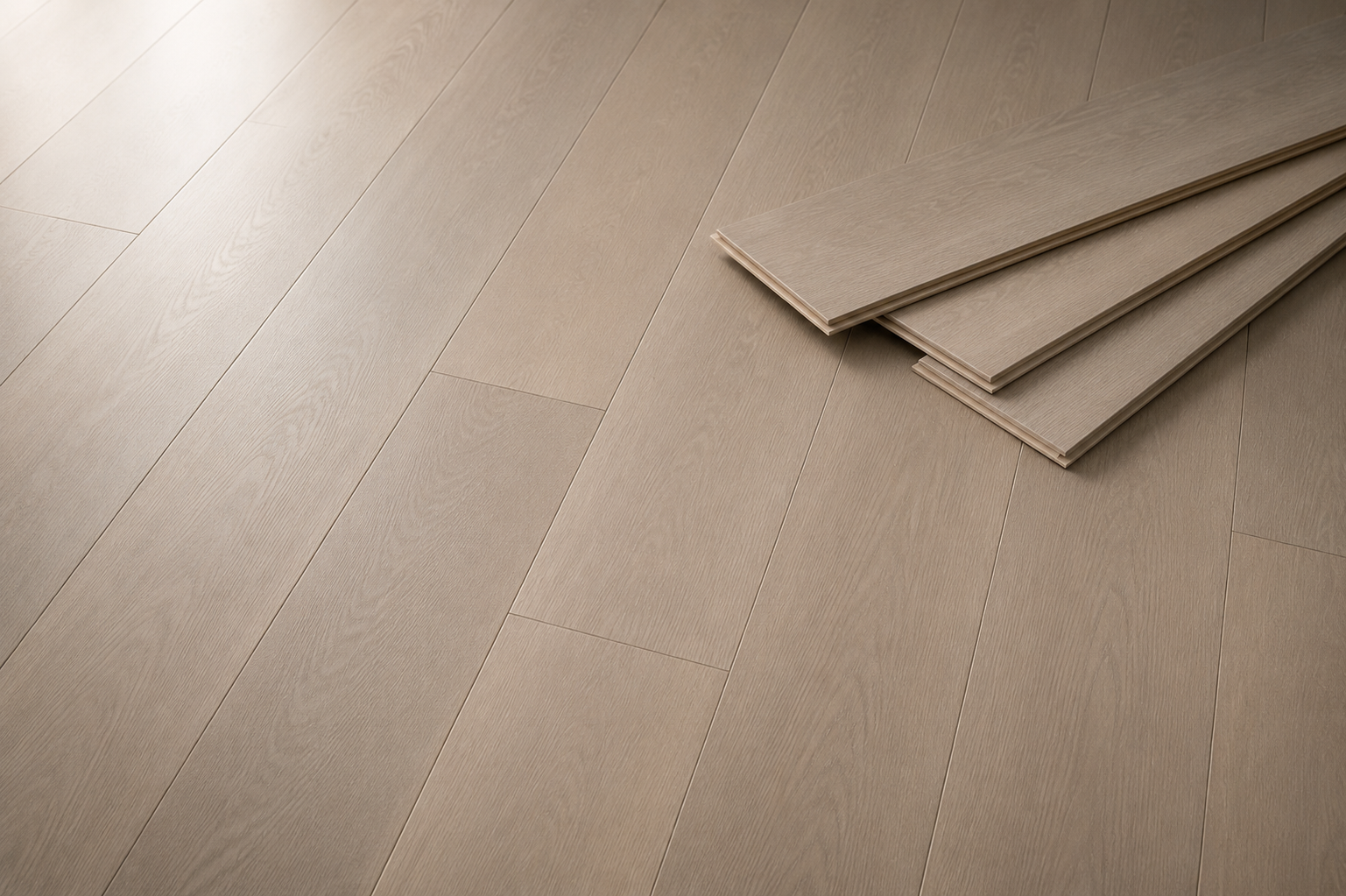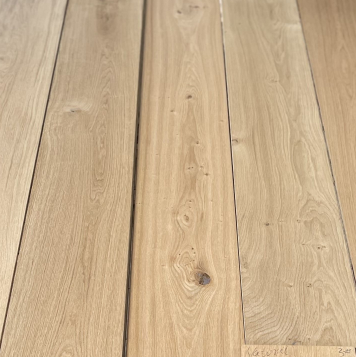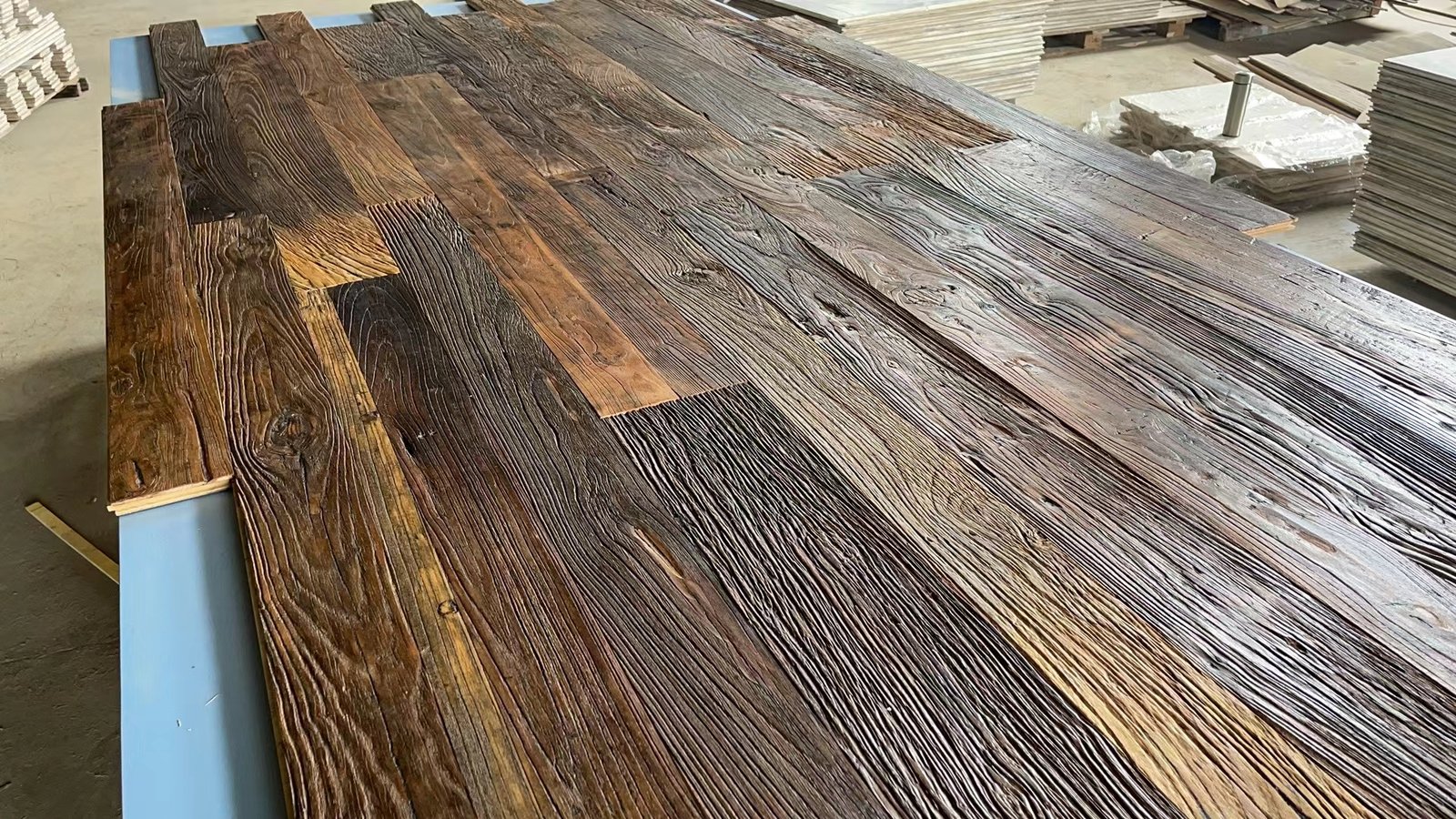
For buyers comparing white oak flooring USA options, sample approval should cover several full planks, more than one lighting condition, the agreed appearance grade, and the selected finish. Record these decisions alongside the construction specification so that purchasing, design, and quality teams work from the same reference.
Here, “USA” identifies the intended sales or project market. It does not indicate American-grown wood, U.S. manufacturing, local stock, or domestic delivery. VIF’s RIVA OEM series uses oak raw material sourced from the Changbai Mountains in Northeast China, described as White Oak in the supplied product information. That raw-material source does not establish where the complete flooring is manufactured.
For U.S. wholesalers, importers, distributors, and project buyers, the practical question is whether the approved samples clearly describe the product being ordered.
1. Start White Oak Flooring USA Selection with a Written Brief
Before reviewing samples, prepare a short purchasing brief. Include your company, intended market or project, estimated quantity, preferred color, grade, dimensions, and finish. Identify who will approve appearance and who will confirm the technical specification.
Separate requirements from preferences. A designer may prefer a cooler appearance while procurement requires a particular thickness. Both decisions belong in the brief, but one should not silently substitute for the other.
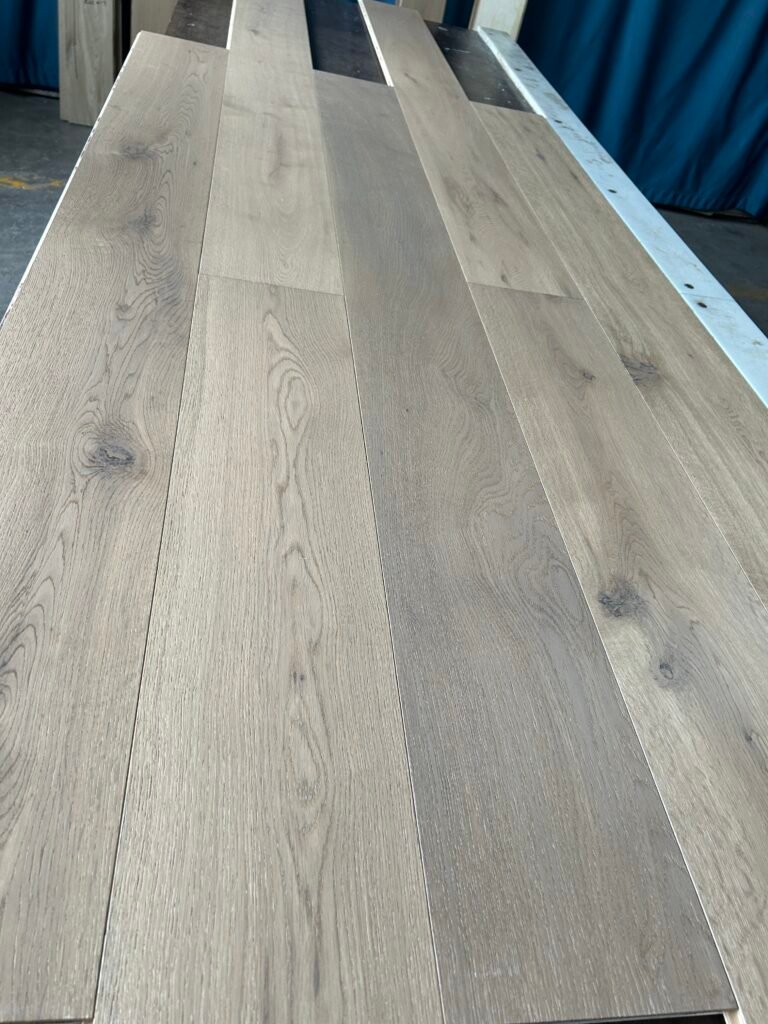
The RIVA series has two documented dimensional options: 1900 × 190 × 14/3mm and 1900 × 190 × 15/4mm. These indicate 14mm total thickness with a 3mm oak face, or 15mm total thickness with a 4mm oak face. Keep millimeters on the approval record to avoid rounding differences.
Select the required construction, joint, and finish separately. A color sample alone does not confirm these options.
2. Review Several Full Planks, Not Just One Attractive Section
Ask whether several full-plank samples can be arranged for the review. Confirm the sample format, quantity, and associated arrangements before relying on them in your purchasing schedule.
Lay the boards together and examine both individual details and the overall composition. Look at grain direction, light-and-dark contrast, visible knots, and any repairs present on the actual samples. Review the complete arrangement rather than choosing only the most uniform board.
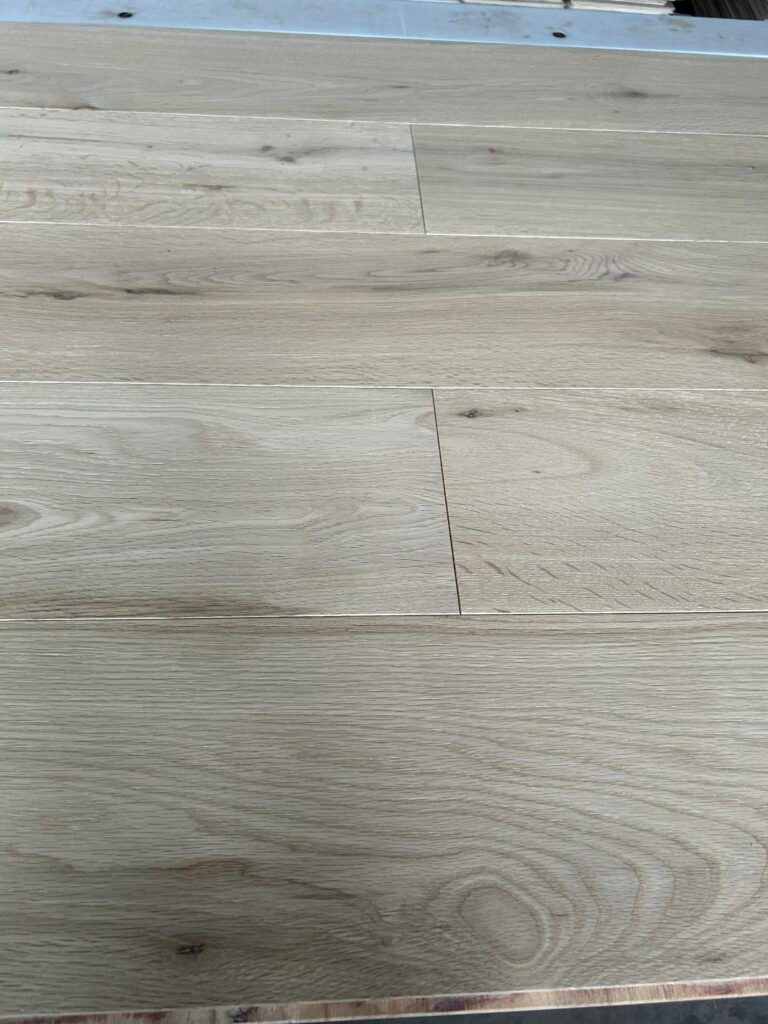
For distributor displays, ask whether the selection explains the appearance clearly enough for sales staff. For projects, ask whether the designer and procurement team accept the same range of board characteristics.
A small sample can help narrow a color shortlist. Several full planks provide a broader reference for discussing variation, but they should still be accompanied by written appearance criteria. Do not describe one sample as a promise that every supplied board will look identical.
3. Compare the Same Samples under Different Lighting
Review the same sample group under the lighting conditions relevant to the decision. Suggested review settings include available daylight, showroom lighting, and the intended project lighting where accessible.
Keep the comparison organized. Use the same boards and surrounding material references, then record the viewing conditions. This makes the approval discussion more useful than comparing unrelated photographs taken in different places.
RIVA’s six color directions provide a starting shortlist: Pearl Beige, Warm Wheat, Linen Beige, Stone Greige, Mist Grey, and Natural Sand. This article focuses on confirming the chosen reference rather than selecting a decorative palette.
Use photographs to document the review, while retaining the physical samples as the agreed appearance reference. Avoid approving a purchase solely because a screen image appears to match another material.
4. Confirm Grade and Finish as Separate Decisions
RIVA currently includes ABC and CD products. Within this series, Premium refers to ABC. Character describes natural board features and is not a universal substitute for CD; the term can cover different letter grades in other grading systems.
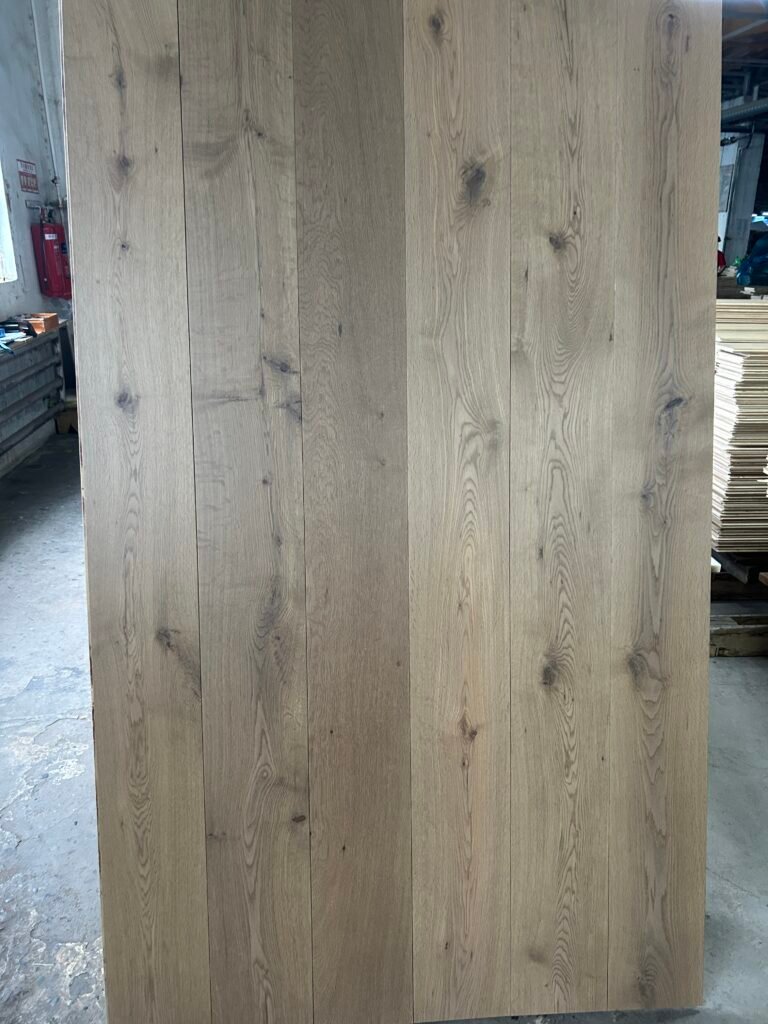
Ask for the written grade criteria applicable to the order. Review these alongside samples of the correct grade. Do not infer allowable knot sizes, repair limits, or a knot-free appearance from the grade name alone.
Finish also requires a separate selection. The documented options are UV Oiled or UV Lacquered, with UV Lacquered being the main option identified for this series’ U.S. market offering. Confirm the actual finish on the approval sample rather than assuming every color uses the same configuration.
| Approval item | What to review or record | Decision to confirm |
|---|---|---|
| Product identity | RIVA color name and ABC or CD grade | Samples correspond to the intended product |
| Board appearance | Several full planks, including visible variation | Overall appearance is accepted |
| Lighting | The same boards under relevant viewing conditions | Approval conditions are documented |
| Finish | UV Oiled or UV Lacquered sample | Selected finish is recorded |
| Dimensions | 1900 × 190 × 14/3mm or 15/4mm | Total and face thickness are distinguished |
| Construction and joint | Selected substrate configuration and joint | Order specification matches the sample record |
5. Turn Sample Approval into a Purchase Reference
Give the approved sample set a reference number and revision date. Record the color, grade, finish, dimensions, construction, joint, and approving parties. Retain photographs of the reviewed boards and written notes on the accepted appearance.
Construction options include three-layer poplar, multilayer poplar, multilayer eucalyptus, or multilayer all-birch. Tongue-and-groove or locking joints are selected by order. These are alternatives requiring confirmation; they are not simultaneous features of one product.
The stated moisture-content control target is 7–9%. Include the relevant product documentation in the purchasing review without treating that target as a guarantee of performance under every site condition.
RIVA sample preparation is approximately two weeks, with sample specifications and fees requiring confirmation. Production lead time starts from 45 days after receipt of the deposit, subject to the confirmed order. It is not an arrival date.
VIF supports weekly order updates, inspection reports, and factory-audit arrangements through its cooperating supply chain. Agree on the documentation required for your order and keep subsequent changes linked to the approved reference.
Frequently Asked Questions
Does “white oak flooring USA” mean American-grown or American-made flooring?
No. In this article, USA identifies the target market. RIVA’s supplied information identifies oak raw material from Northeast China’s Changbai Mountains; this does not establish the complete flooring’s manufacturing origin.
Should buyers approve color from one small sample?
A small sample can support initial screening. For purchasing approval, discuss a review involving several full planks and written criteria covering the accepted appearance.
Can ABC and CD samples be used interchangeably?
Use samples corresponding to the grade being ordered. A shared color name does not make ABC and CD the same approval reference. Confirm the applicable written grading criteria.
Does a locking joint confirm installation suitability?
The joint is an order option. Installation suitability and instructions require separate confirmation; they should not be inferred from the joint description alone.
Does VIF offer unfinished RIVA flooring?
The documented finish options are UV Oiled and UV Lacquered. Unfinished supply has not been confirmed and should not be assumed when preparing a purchasing specification.
Discuss Your Sample and Specification Requirements
Review the relevant RIVA color and grade products, then send VIF your company details, intended U.S. market or project, estimated quantity, and preferred configuration. Include your sample-review requirements so that appearance and purchasing specifications can be discussed together.