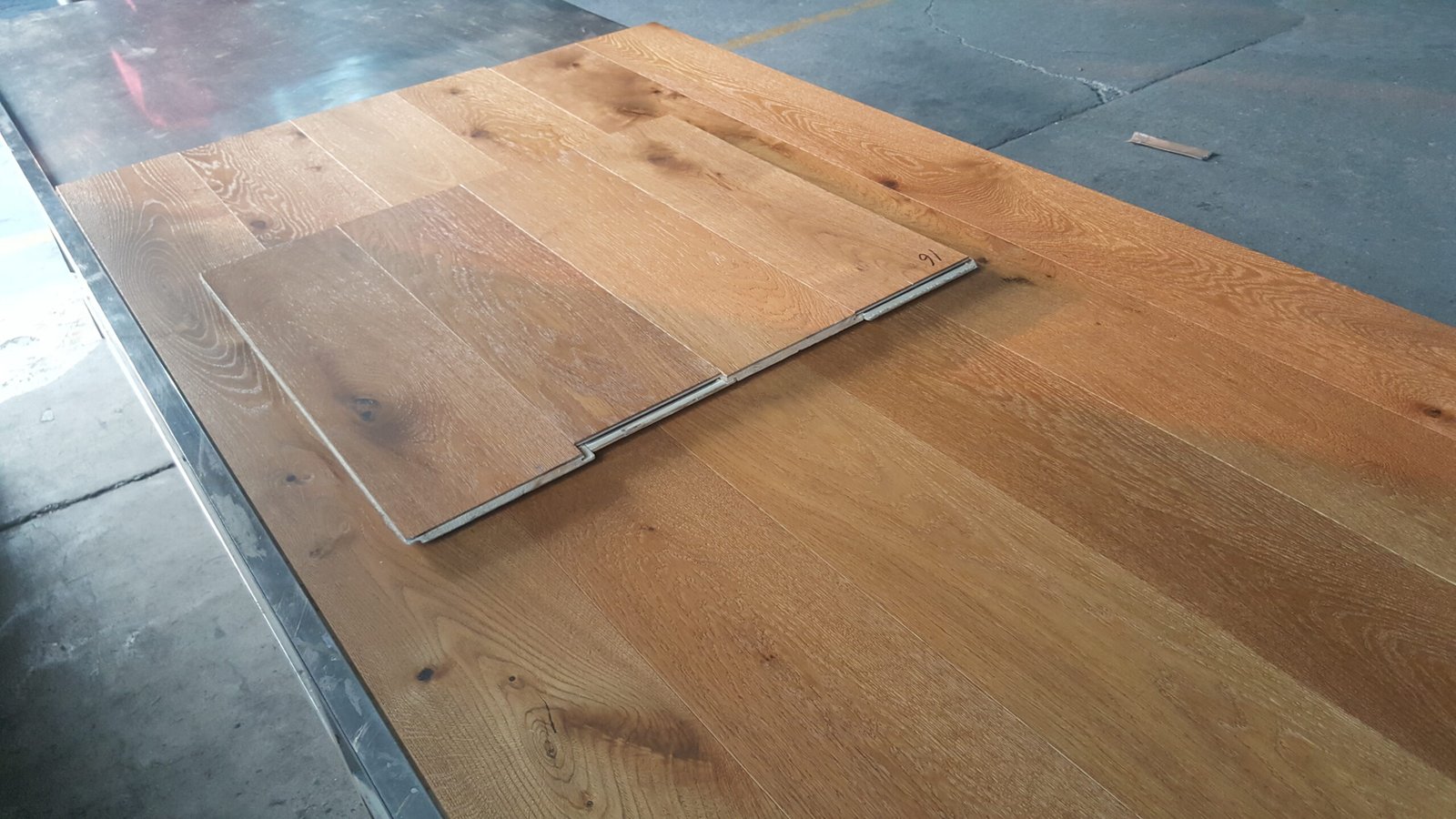
Rustic oak flooring combines natural knots, color variation and authentic wood character with the structural stability required for residential and commercial projects. Unlike clean-grade flooring, rustic oak preserves more of the tree’s natural features, giving every installation a warmer and more individual appearance.
For importers, wholesalers, distributors, contractors and project buyers, choosing rustic engineered oak flooring involves more than selecting a color. Buyers should also understand the grade, knot repairs, surface treatment, construction, dimensions and acceptable variation.
This guide explains the main characteristics of rustic oak flooring and helps professional buyers select suitable specifications for their markets and projects.
What Is Rustic Oak Flooring?
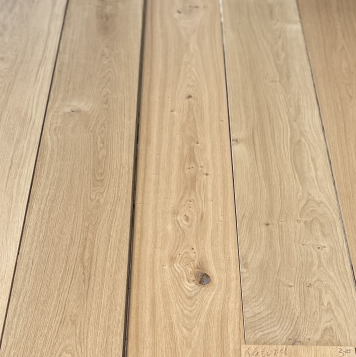
Rustic oak flooring is produced from oak boards that retain visible natural characteristics such as knots, color variation, mineral marks, sapwood and occasional surface cracks.
These characteristics are not automatically considered defects. They form part of the intended rustic grade and create the natural appearance that distinguishes rustic flooring from Prime, Select or cleaner oak grades.
Depending on the grading standard and agreed product specification, rustic oak flooring may include:
- Sound knots
- Filled knots
- Open or partially repaired knots
- Natural color variation
- Sapwood
- Mineral streaks
- Small surface cracks
- Irregular grain patterns
- Character marks caused by natural growth
The permitted size, quantity and repair method of these features should be confirmed before production. Because grading standards vary between suppliers and markets, buyers should not rely only on the word “rustic.”
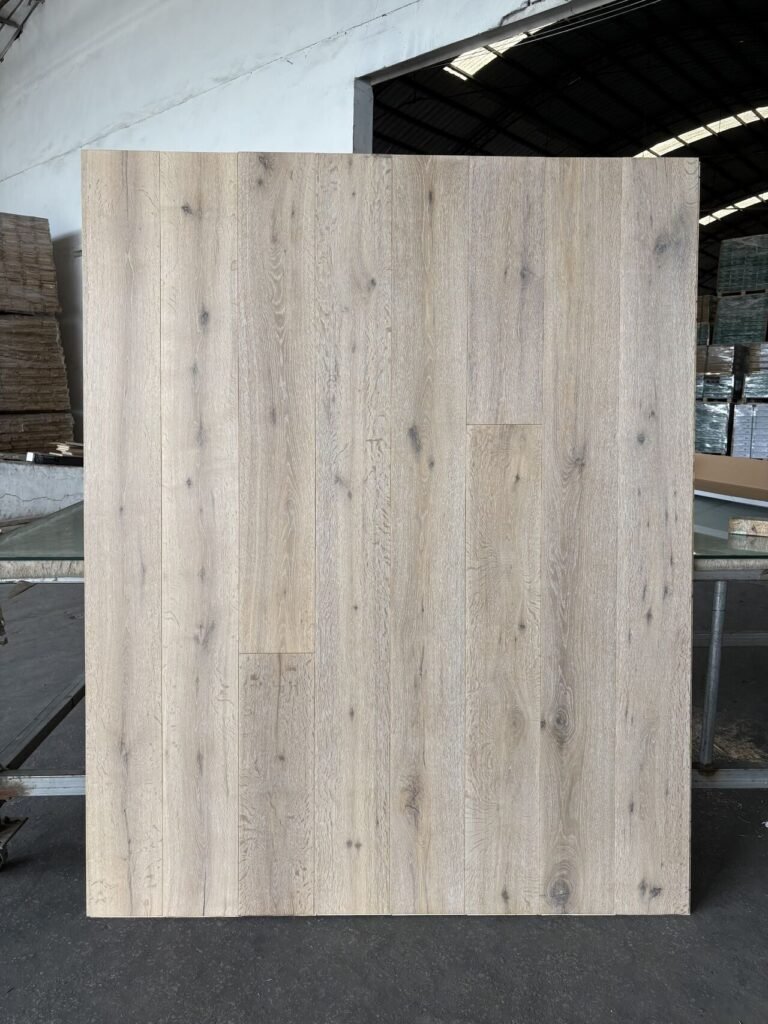
A physical sample, approved control sample or written grading specification provides a clearer quality reference.
oak engineered flooring supplier
Rustic Oak Flooring Grades Explained
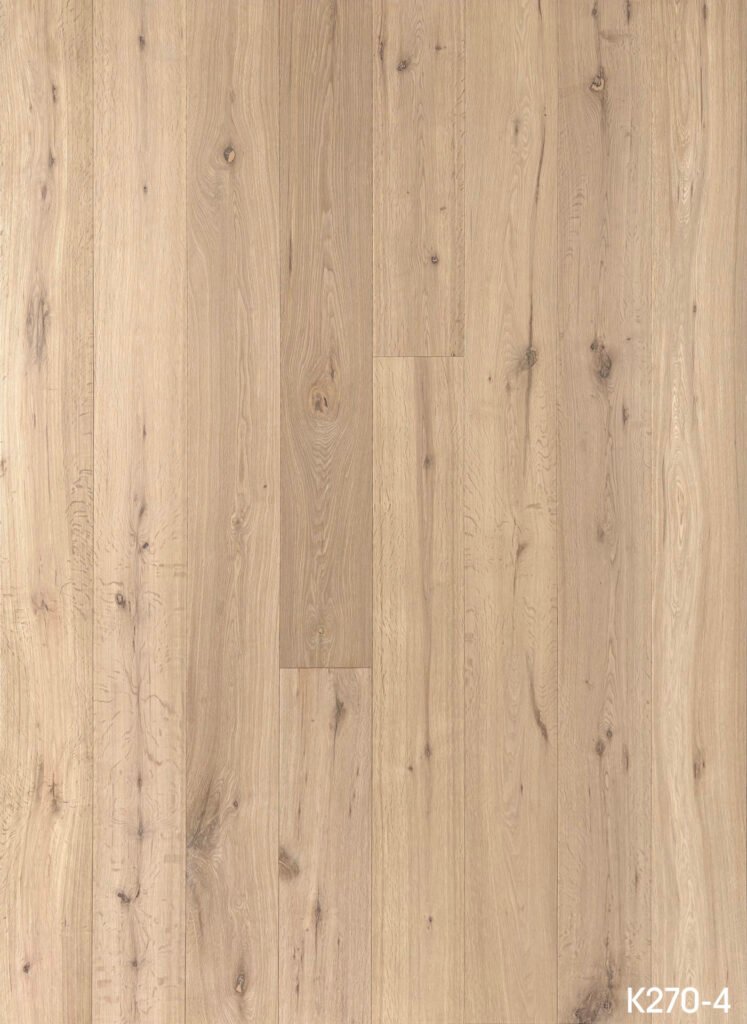
There is no single international rustic grading rule used by every flooring supplier. Terms such as Rustic, Character, Natural, ABCD, EF and DD may describe different levels of knots and natural variation.
A typical comparison is shown below.
| Grade | General Appearance | Typical Natural Features | Suitable Applications |
|---|---|---|---|
| Prime or Select | Clean and uniform | Very limited knots and color variation | Minimalist and premium interiors |
| Natural | Balanced natural character | Small to medium knots and moderate variation | Residential and general commercial projects |
| Rustic | Strong natural character | Larger knots, repairs, cracks and visible variation | Rustic, industrial and design-focused spaces |
| Extra Rustic or DD | Highly expressive appearance | Frequent knots, stronger contrast and more repairs | Feature spaces and highly characterful interiors |
This comparison is only a general guide. The actual acceptance standard should define:
- Maximum knot size
- Permitted open knots
- Filled-knot requirements
- Allowed surface cracks
- Sapwood percentage
- Color variation
- Repair material and color
- Permitted defects on board edges
- Average and minimum board lengths
For wholesale programs, retaining an approved reference panel makes future production and quality inspection more consistent.
Natural Knots, Cracks and Repairs
Knots and cracks are among the most important characteristics of rustic oak flooring. Their appearance and repair quality directly affect the overall look of the finished floor.
Sound Knots
Sound knots remain firmly connected to the surrounding wood. They can usually be retained to emphasize the natural character of the oak.
Filled Knots
Open knots are normally repaired with filler or putty. The filler color may be selected to blend with the wood or create a deliberate contrast.
Dark filler emphasizes the knot pattern and produces a stronger rustic appearance. Color-matched filler creates a quieter, more balanced surface.
Natural Cracks
Small surface cracks may be accepted in rustic grades, depending on the agreed standard. Larger or unstable cracks should be repaired or removed during production.
The buyer should clarify whether visible cracks are:
- Fully filled
- Partially filled
- Left open for a more natural appearance
- Structurally reinforced when necessary
Repair Consistency
For large wholesale orders, the repair method should remain visually consistent across different production batches. Buyers should evaluate filler color, repair smoothness and the contrast between repaired areas and the selected finish.
Rustic grading allows natural variation, but it should not mean uncontrolled quality.
Popular Rustic Oak Flooring Colors
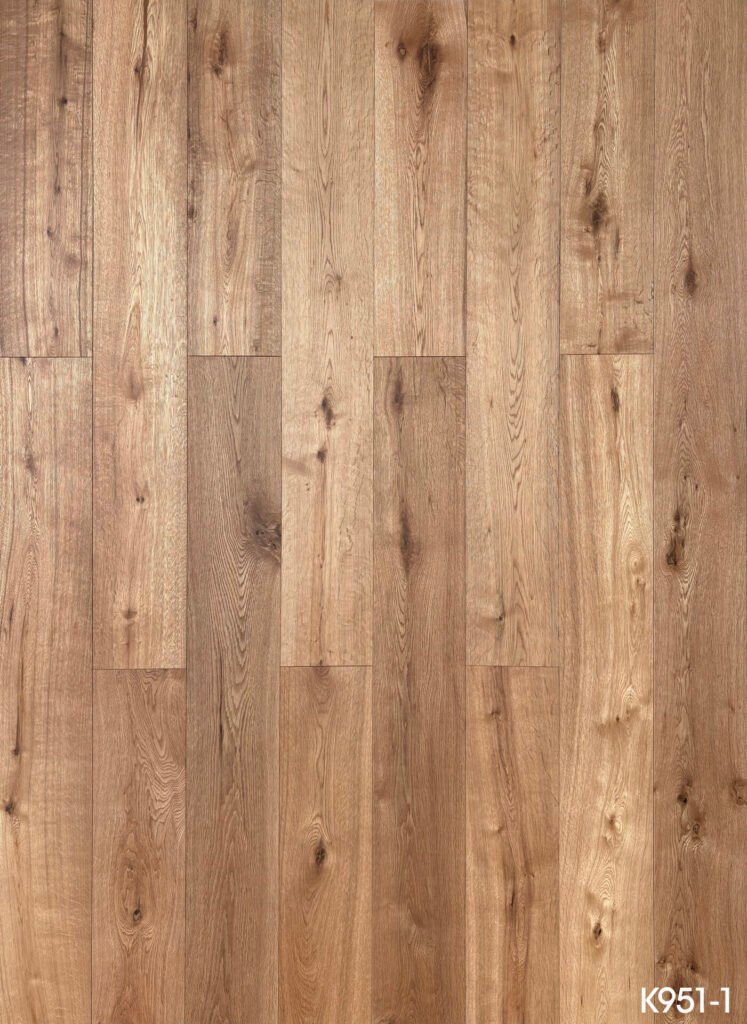
Rustic oak works with a broad range of colors because knots, grain variation and repaired features create natural depth beneath the finish.
Natural Oak
Natural oil or clear matte finishes preserve the warm color of oak and clearly display its grain and knots. This is one of the most versatile choices for residential, hospitality and retail projects.
Invisible or Raw-Wood Look
An invisible finish reduces the visual effect of the coating and creates a light, untreated appearance. It is suitable for Scandinavian, minimalist and contemporary interiors.
White and Light-Washed Colors
White oil, lime wash and pale stains soften the natural color of oak while keeping knots and grain visible. These finishes are often used in bright residential interiors and coastal-style projects.
Smoked and Brown Tones
Smoked, reactive-stained and warm brown finishes emphasize the contrast between earlywood, latewood and natural knots. They are suitable for classic, industrial and hospitality interiors.
Grey and Neutral Colors
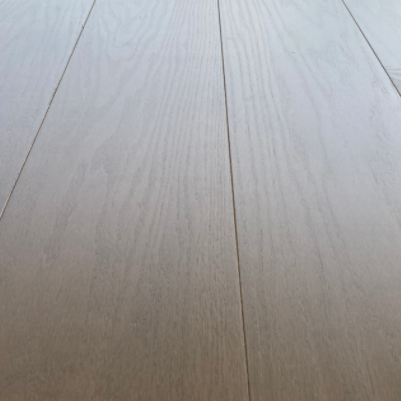
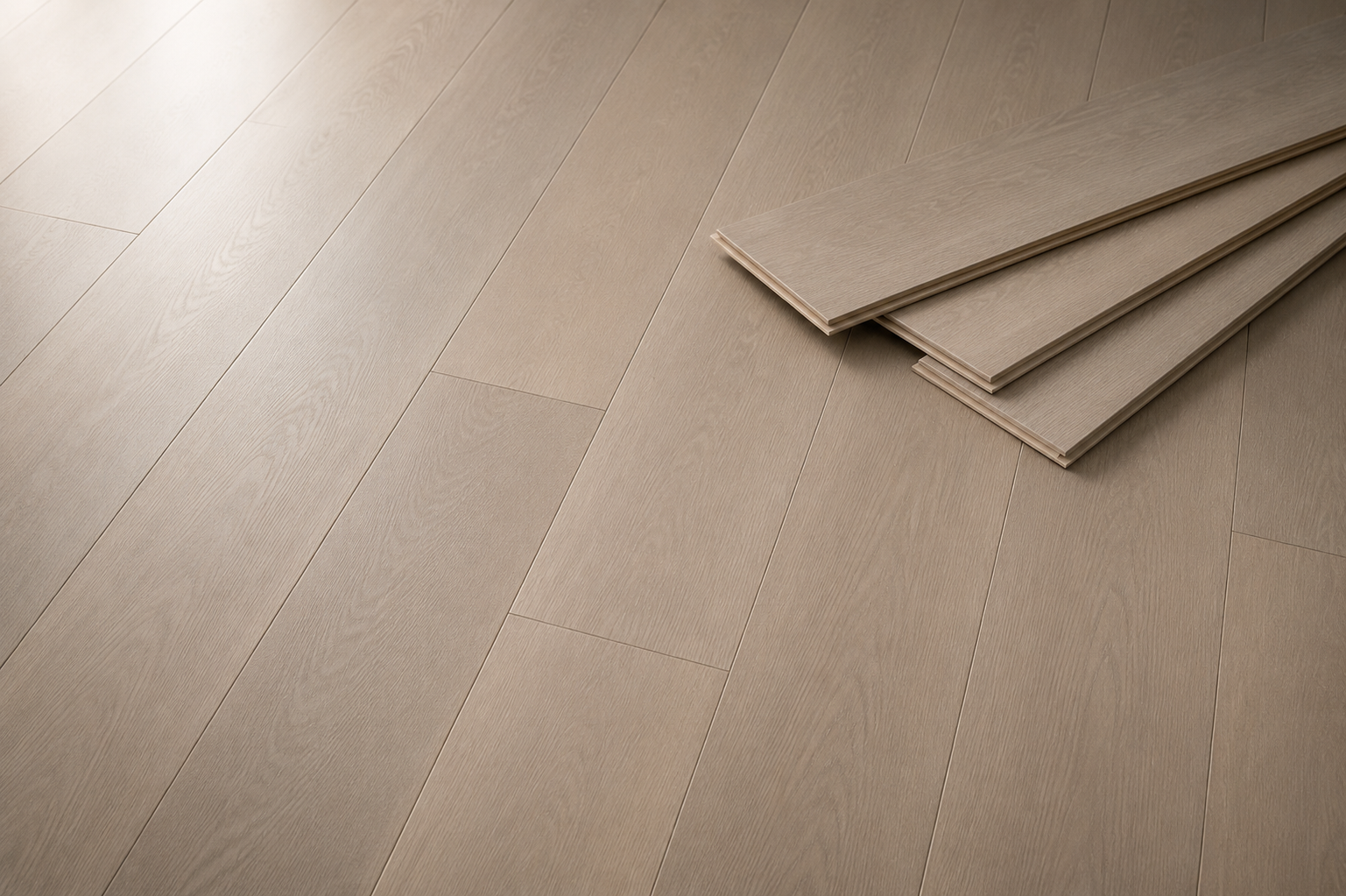
Grey, greige and neutral-brown colors combine rustic texture with a more contemporary appearance. Color control is especially important because reactive treatments may produce stronger variation on rustic boards.
Custom Colors
Colors can be developed from:
- A physical wood sample
- A flooring sample
- A color board
- A reference image
- A specified color direction
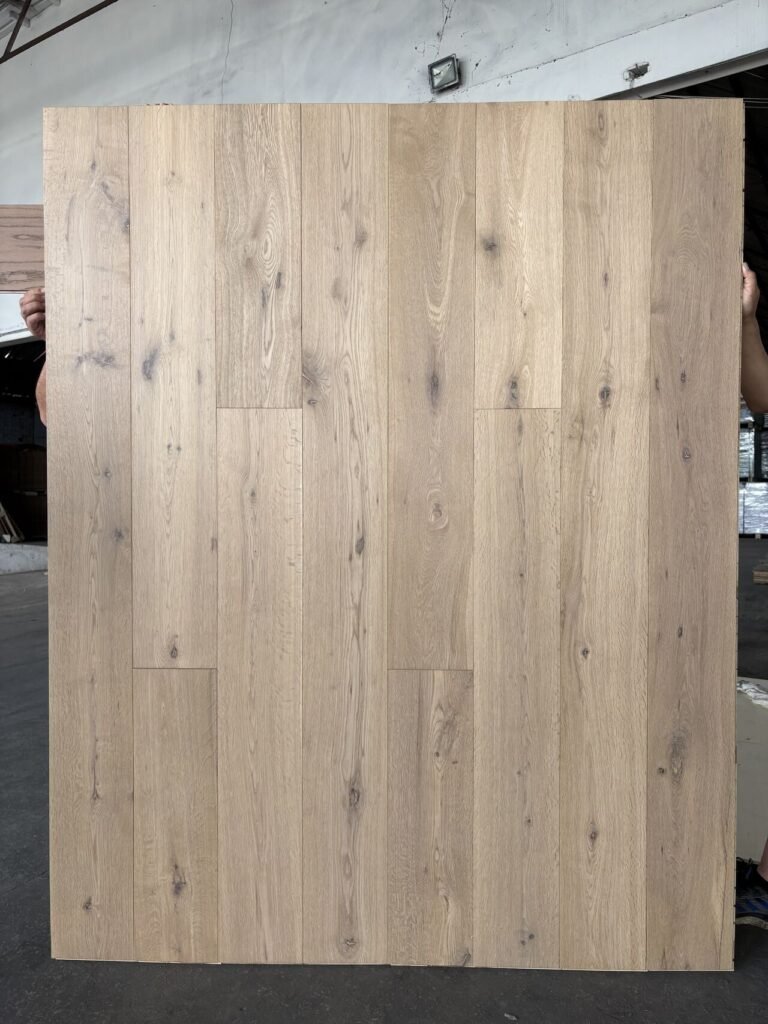
For customized programs, buyers should approve a physical sample before mass production. Digital images alone cannot accurately represent wood grain, gloss level and natural color variation.
Surface Finishes for Rustic Oak Flooring
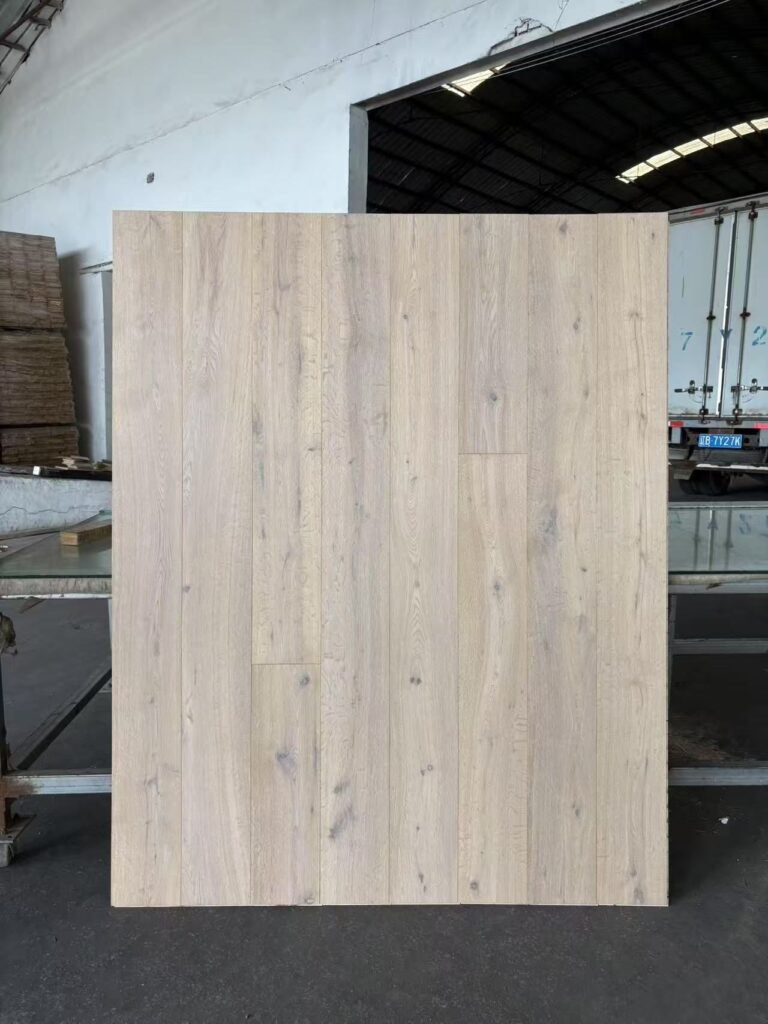
The surface treatment determines how strongly the knots and grain can be seen and felt.
Brushed Surface
Wire brushing removes softer wood fibers and emphasizes the grain. It is one of the most common treatments for rustic oak flooring because it enhances texture without creating an excessively distressed appearance.
Hand-Scraped Surface
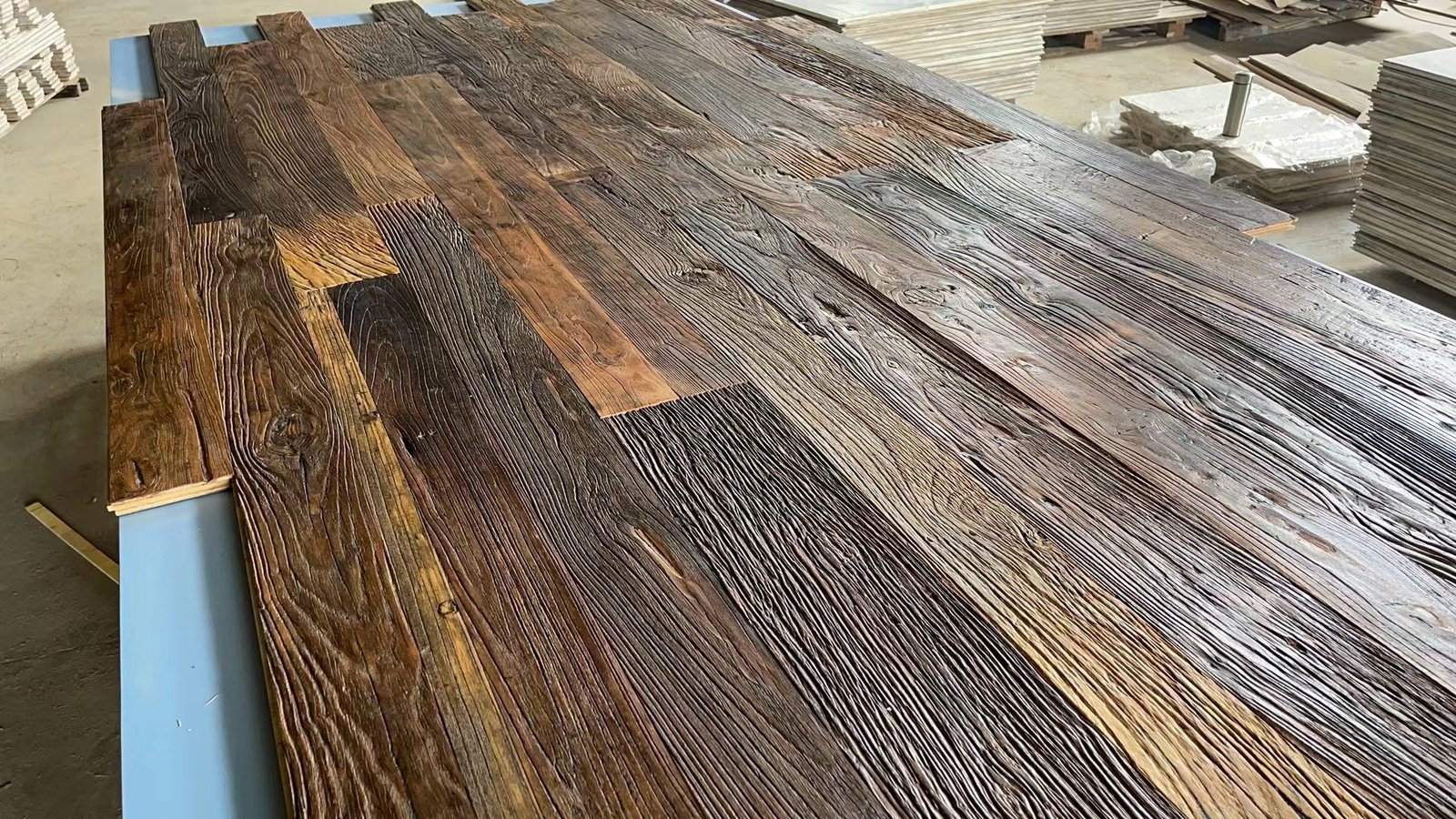
Hand scraping creates visible surface movement and a more traditional appearance. The depth and frequency of scraping should be controlled to prevent the floor from looking inconsistent.
Reactive Stain
Reactive treatments interact with natural tannins in oak, producing layered colors and variation. Rustic boards may react differently from plank to plank, so a wider color range should be expected.
Smoked Finish
Smoking deepens the color of oak and highlights natural grain variation. The final tone depends on the treatment time, wood characteristics and subsequent finishing process.
Natural Oil
Natural oil provides a low-gloss appearance and emphasizes the texture of the wood. Oiled flooring may require periodic maintenance depending on the application and level of use.
UV Lacquer
UV lacquer creates a protective coating and is generally easier to maintain. Matte lacquer can retain a natural appearance while providing a practical surface for residential and commercial applications.
The finish should be selected according to the target market, cleaning method, expected traffic and desired visual effect.
Three-Layer vs Multi-Layer Structure
Rustic oak flooring can be produced using three-layer or multi-layer engineered construction. Both structures can perform well when properly manufactured, but they have different characteristics.
| Feature | Three-Layer Construction | Multi-Layer Construction |
|---|---|---|
| Structure | Oak wear layer, core layer and backing layer | Oak wear layer over multiple plywood layers |
| Core material | Commonly poplar or another softwood core | Commonly eucalyptus, birch or combined plywood |
| Appearance | Suitable for long and wide plank formats | Suitable for a wide range of dimensions |
| Stability | Stable when correctly constructed and conditioned | Strong cross-layer dimensional support |
| Installation | Depends on profile and project requirements | Commonly used for glue-down installation |
| Best choice | Depends on product design and target market | Depends on subfloor and project conditions |
Neither construction should automatically be described as better or cheaper in every situation. The correct choice depends on:
- Board width and length
- Total thickness
- Oak wear-layer thickness
- Installation method
- Local climate
- Underfloor heating
- Target price
- Market preference
Buyers should compare the complete product specification rather than selecting flooring only by the number of structural layers.
Available Sizes and Custom Options
Rustic engineered oak flooring can be supplied in standard and customized dimensions.
Common specification options include:
| Item | Available Options |
|---|---|
| Wood species | European oak and other oak options |
| Grade | Natural, Rustic, EF Rustic, DD or customized grading |
| Construction | Three-layer or multi-layer |
| Total thickness | Commonly 14 mm, 15 mm or customized |
| Oak wear layer | Commonly 3 mm or 4 mm |
| Width | Approximately 190 mm, 220 mm, 240 mm or 260 mm |
| Length | Approximately 1,900 mm or 2,200 mm |
| Surface | Brushed, smoked, reactive stained or distressed |
| Finish | Natural oil, UV oil or UV lacquer |
| Color | Natural, invisible, white, smoked, brown, grey or customized |
| Edge profile | Micro-bevel or customized |
| Installation profile | Tongue and groove or customized |
Available specifications depend on the selected construction, raw material and order requirements. Final dimensions should be confirmed before quotation and sampling.
Wide Rustic Oak Planks
Wide planks display more of the oak’s natural grain and reduce the number of joints across the floor. They are particularly suitable for villas, hotels, large apartments and open commercial interiors.
However, wider and longer boards require careful moisture control, accurate machining and stable engineered construction.
Random-Length and Fixed-Length Programs
The length composition must be clearly stated in the quotation and sales contract. Buyers should confirm:
- Fixed or random lengths
- Minimum board length
- Maximum board length
- Short-board percentage
- Packaging method
- Quantity per carton
- Quantity per pallet
This prevents misunderstandings when the order arrives.
Choosing Rustic Oak Flooring for Different Projects
Residential Projects
Natural, invisible and light-washed colors work well in living rooms, bedrooms and open-plan residential spaces. A balanced rustic grade can add warmth without making the room appear excessively irregular.
Hotels and Restaurants
Smoked, brown and reactive colors create a stronger atmosphere and can complement stone, metal and textured wall finishes. The selected coating should match the expected foot traffic and maintenance program.
Retail Spaces
Rustic flooring can help create an authentic, material-focused environment. Its natural variation also makes minor signs of daily use less visually prominent than on highly uniform flooring.
Large Developments
For multi-unit residential or commercial projects, grading consistency, batch-to-batch color control and replacement-board availability are particularly important.
Before confirming a project order, buyers should approve:
- Grade sample
- Color sample
- Gloss level
- Surface texture
- Construction
- Dimensions
- Packaging
- Acceptable color range
Is Rustic Oak Flooring Suitable for Wholesale Programs?
Rustic oak flooring can be a strong product category for wholesalers and distributors because it offers multiple price, color and specification options.
It is particularly suitable for a wholesale program when the supplier can provide:
- Clearly defined grading standards
- Repeatable surface treatments
- Stable construction
- Consistent repair methods
- Controlled production samples
- Customized colors and dimensions
- Suitable packaging
- Reliable batch records
- Quality inspection before shipment
Build a Clear Product Range
Instead of offering too many similar finishes, distributors can begin with a focused rustic collection, such as:
- One natural color
- One light or invisible color
- One whitewashed color
- One smoked or brown color
- One grey or neutral color
This provides enough variety for different markets while making samples and inventory easier to manage.
Confirm Natural Variation With Customers
Rustic flooring should be sold with clear expectations. Product samples, room-scene images and grading explanations help customers understand that knots and color differences are intentional characteristics.
Keep Approved Samples
Approved samples should be retained by both buyer and supplier. They provide a reference for color, grading, repairs, texture and gloss during repeat production.
What to Check Before Ordering Rustic Oak Flooring
Before confirming a wholesale or project order, ask the supplier to clarify the following information:
- What grading standard is being used?
- What knot sizes and repairs are permitted?
- Are open cracks allowed?
- How much sapwood is acceptable?
- Is the structure three-layer or multi-layer?
- What is the total thickness and wear-layer thickness?
- Are the boards fixed-length or random-length?
- What percentage of short boards is included?
- What finish and gloss level will be applied?
- How is color variation controlled?
- What packaging will be used?
- Can a production sample be approved before mass production?
- What quality inspections are completed before shipment?
- Are the required certificates available for the destination market?
A detailed specification sheet and approved physical sample reduce the risk of disputes after delivery.
Frequently Asked Questions
What is rustic oak flooring?
Rustic oak flooring is a wood floor that retains natural characteristics such as knots, color variation, mineral marks, sapwood and repaired cracks. It offers a more expressive appearance than Prime or Select grades.
Is rustic oak flooring lower quality?
No. Rustic describes the visual grade rather than the basic manufacturing quality. Properly dried, machined, repaired and finished rustic flooring can provide reliable performance.
What is the difference between rustic and natural oak flooring?
Natural grade generally has moderate knots and color variation. Rustic grade normally allows larger or more frequent knots, stronger color differences and more visible repairs.
Are knots in rustic oak flooring defects?
Knots are expected features of rustic flooring. However, loose or open knots should be repaired according to the agreed grading and quality standard.
Does rustic oak flooring hide scratches?
The grain variation, knots and textured finishes may make minor signs of wear less noticeable than on a very clean and uniform floor. However, rustic flooring is not scratch-proof.
Which colors work best with rustic oak?
Natural, invisible, whitewashed, smoked, brown, grey and reactive-stained colors are commonly used. The best choice depends on the interior style and desired level of variation.
Is three-layer or multi-layer rustic flooring better?
Both can be suitable. The decision should be based on dimensions, climate, installation method, underfloor heating, target market and required price range.
Is rustic engineered oak flooring suitable for commercial projects?
Yes, provided the construction, coating and installation system are selected for the expected foot traffic and maintenance conditions.
Can rustic oak flooring be used with underfloor heating?
Selected engineered constructions may be suitable for underfloor heating. Compatibility should be confirmed for the flooring structure, adhesive and heating system before ordering.
Can the knot filler color be customized?
Yes. Depending on production requirements, filler may be color-matched to the wood or selected in a darker contrasting color.
Can rustic oak flooring colors and sizes be customized?
Yes. Color, width, length, thickness, construction, surface treatment and finish can be developed according to wholesale or project requirements.
What should wholesalers approve before production?
Wholesalers should approve the grade, color range, knot repairs, surface texture, gloss, construction, dimensions, length composition and packaging.
Explore Rustic Engineered Oak Flooring
Rustic engineered oak flooring offers natural character, flexible specifications and a wide range of colors for residential, commercial and hospitality applications.
VIFLOOR supplies customized engineered oak flooring for importers, wholesalers, distributors, contractors and project buyers. Available options include different grades, structures, dimensions, surface treatments and finishes.
Explore our complete oak engineered flooring collection or contact VIFLOOR to request samples, specifications and a project quotation.